We just ended two weeks in Avila Beach on the California central coast about four hours south of San Francisco and 15 minutes south of San Luis Obispo (known out here as just “SLO”). After three months in the desert, it couldn’t have been more different. The air is moist and warm, but not hot, and the hills are deep green due to recent rains.
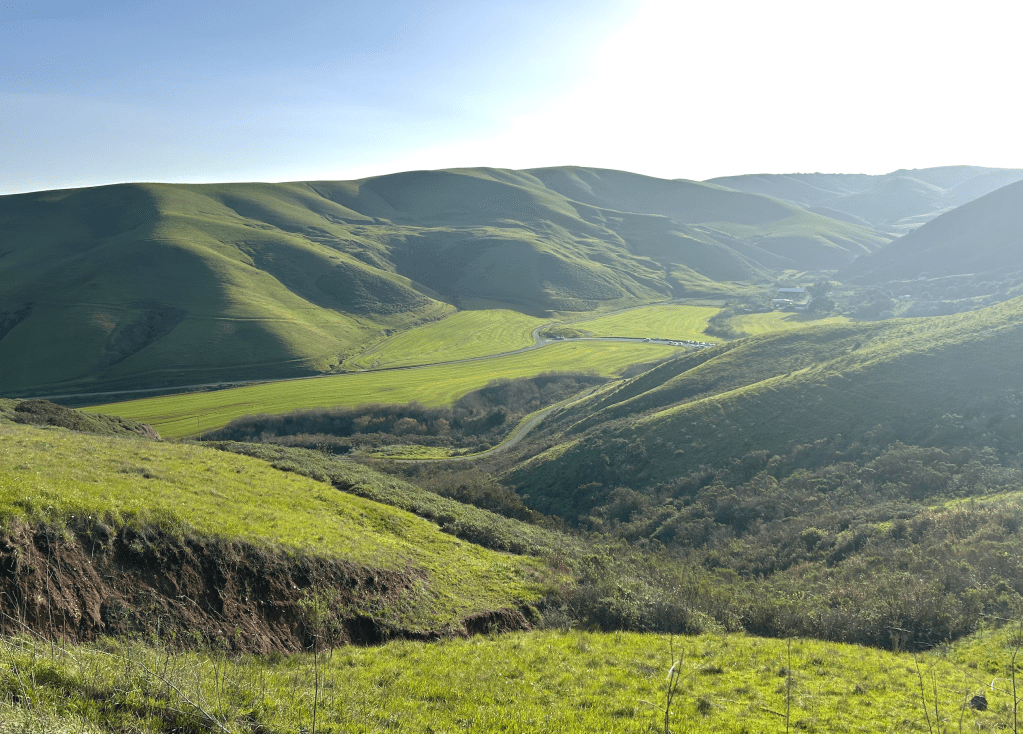
Not like the desert…
The park is small (only 60 sites) and the sites are spacious and immaculately maintained. Every site overlooks the San Luis Obispo Bay and has a clear view of the morning sunrise. The road ends a quarter mile after the RV park so there is no through traffic. The town of Avila Beach (5-minute bike ride away) has a population of less than 1,500 and has that “beach town” feel that is hard to describe but “you know it when you feel it”. It would provoke nostalgia for anyone who has spent time next to sand beaches and the ocean.
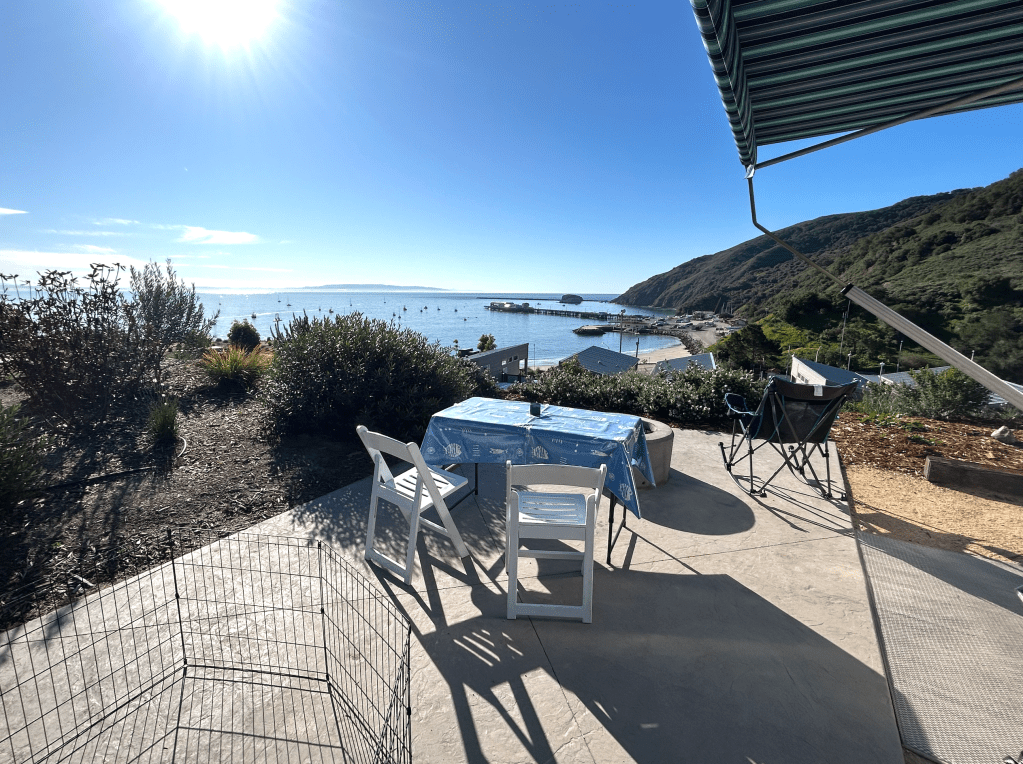
Our view of the bay
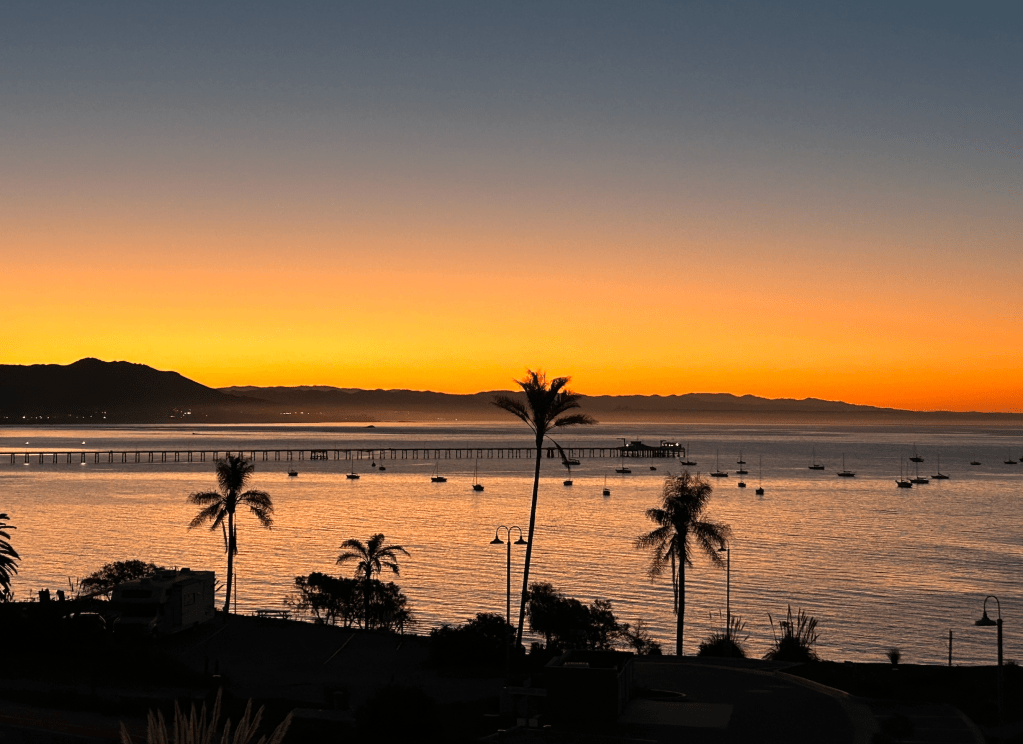
Sunrise over the bay
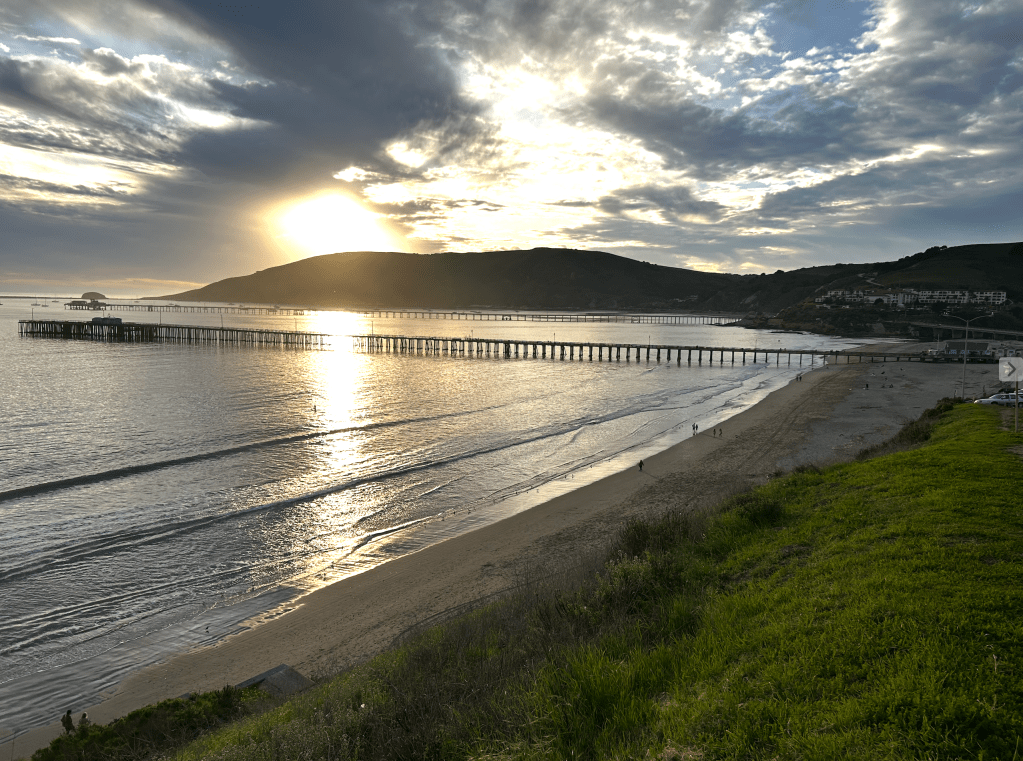
Almost sunset
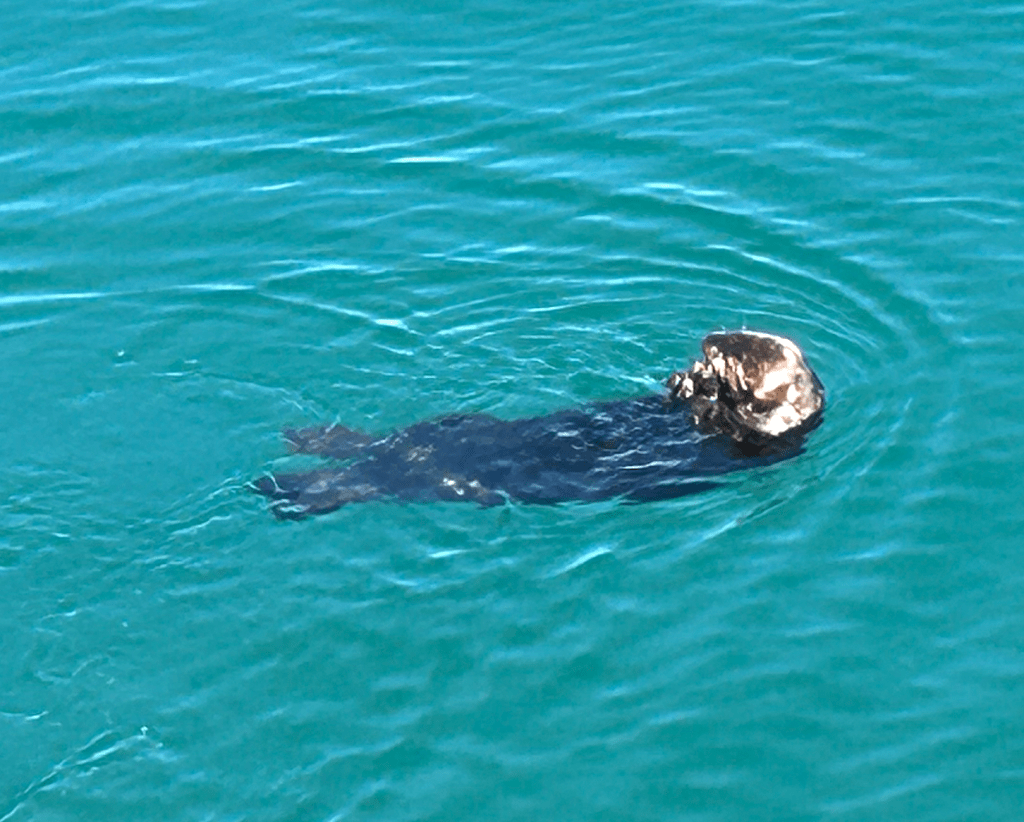
These playful critters grab a wad of mussels from the pier posts and float around crunching them down.
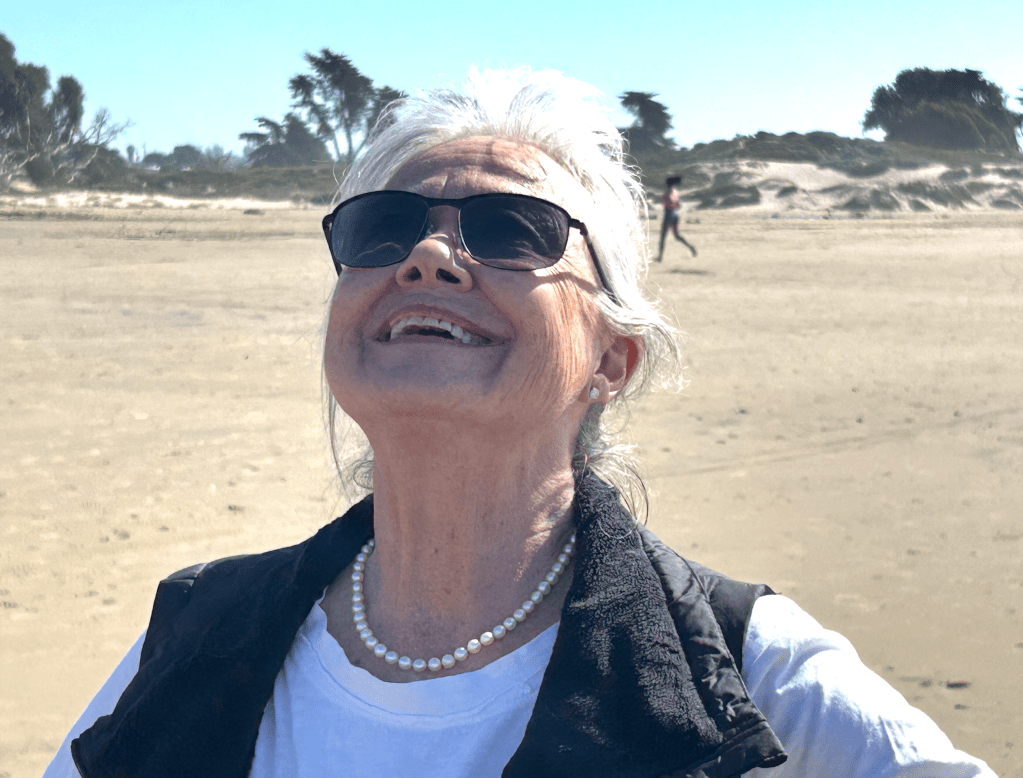
I think Michelle likes the beach!
We happened to be in Avila for two weeks during what the locals described as an unusually delightful stretch of winter weather – lows in the low 50s and highs in the mid to upper 70s, and sunny all day. OMG! They warned us that if we came back, we shouldn’t assume that would get repeated – it could easily be raining and in the 50s for a week or more. This won’t discourage us – we are already scheming about how to get back.
Canine Bliss Too
Avila Beach has one of the few dog-friendly beaches in the area – and not just dogs, but dogs off leash. On nice days the beach is swarming with unleashed canines. We took Wren and Bob down a few times. On weekends, parked by the road above the beach is a “community sauna” that you can rent for an hour at a time to get the blood back in your veins after swimming in the 56-degree water. I did go swimming several times and it was actually not so bad – pretty much like the early season on the coast of Maine.
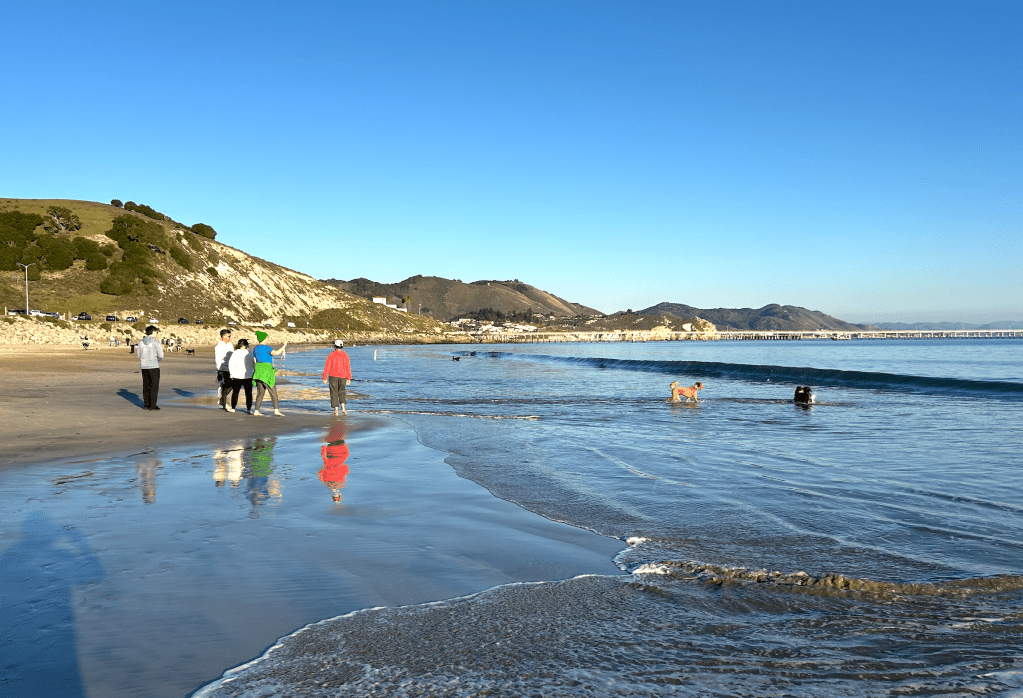
Canine beach fun
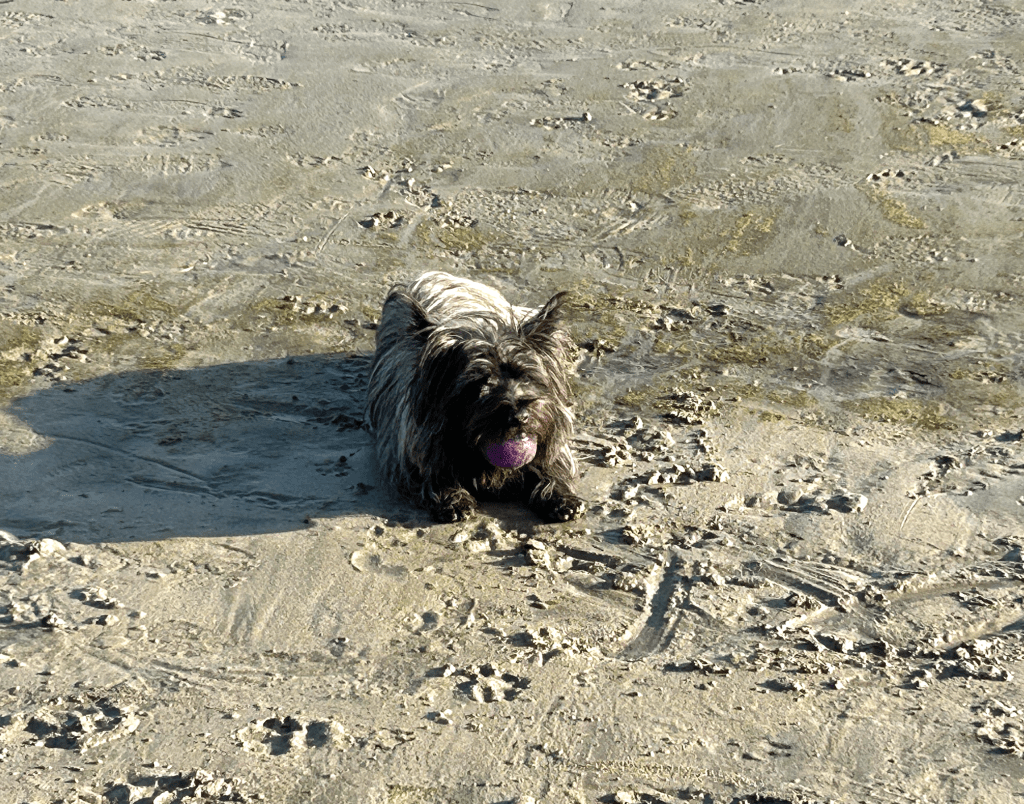
Wren protecting her ball from the other dogs
Hiking Where the Peak is Not the Point
If you are looking for high vertical hiking, the Central Coast is not the place to find it. The topography is just lower, with typical peaks at 1,400 or 3,000 feet. But what it does have is trails that take you to stunning coastal vistas. I found two of them, both of which had a “tip of the hat” to vertical hiking and views from the peak, but whose main event was definitely the shoreline.
The first was a 10-mile hike about an hour south of us out to the end of Point Sal (we could see the point from our trailer site). It was a blast! Like desert hiking, there was no tree line and great views the whole way. Like canyon hiking, most of the vertical was on the way home. The trail wound its way down to a point of rock (Point Sal) sticking out into the ocean. The day was bright and the surf was high. Ten-foot waves pummeled the shore, shooting magnificent sprays of brilliant white foam into the air. The wind was off the shore. As the waves came in, the wind blew the mist back over the waves, creating plumes of gorgeous rainbow hoods in the sun. I was mesmerized. It was hard to leave.
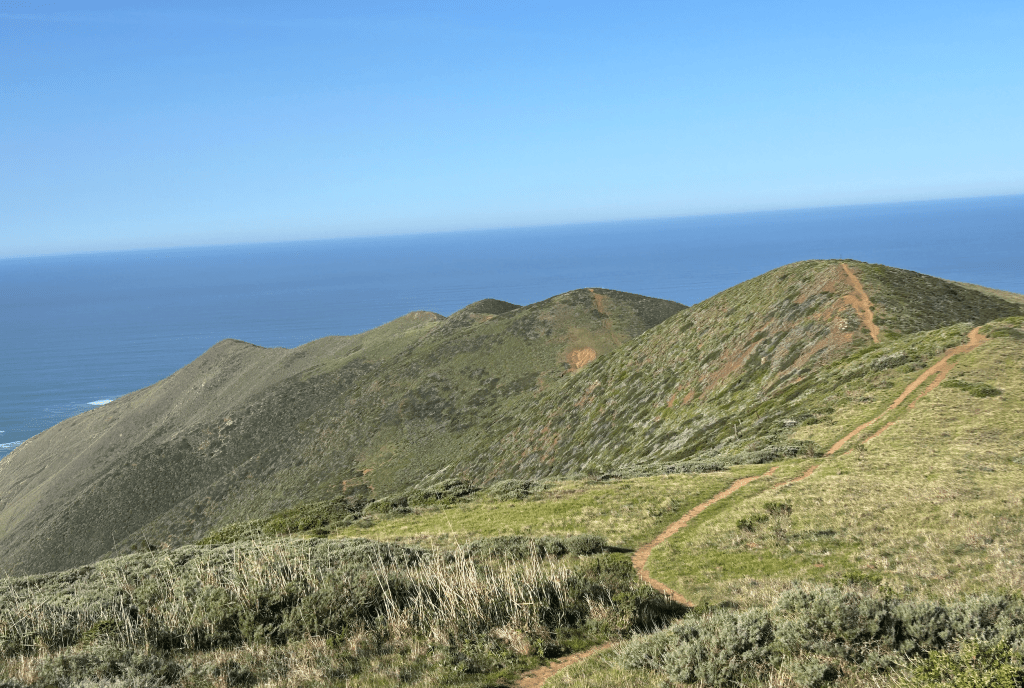
Hiking down to the beach
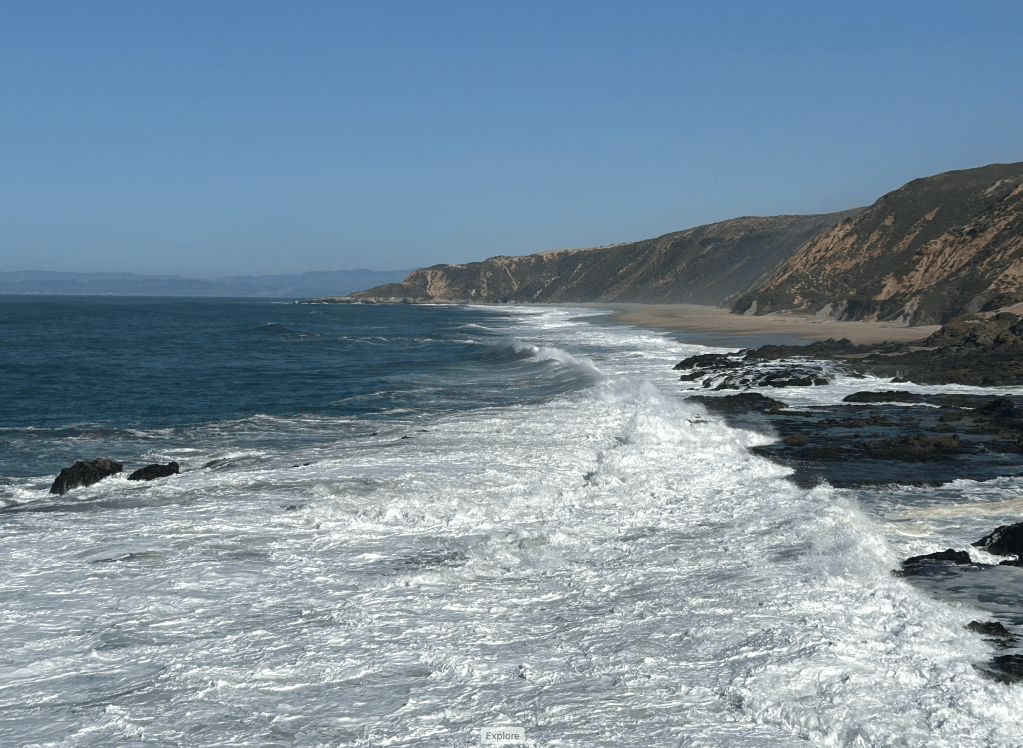
Foam delight
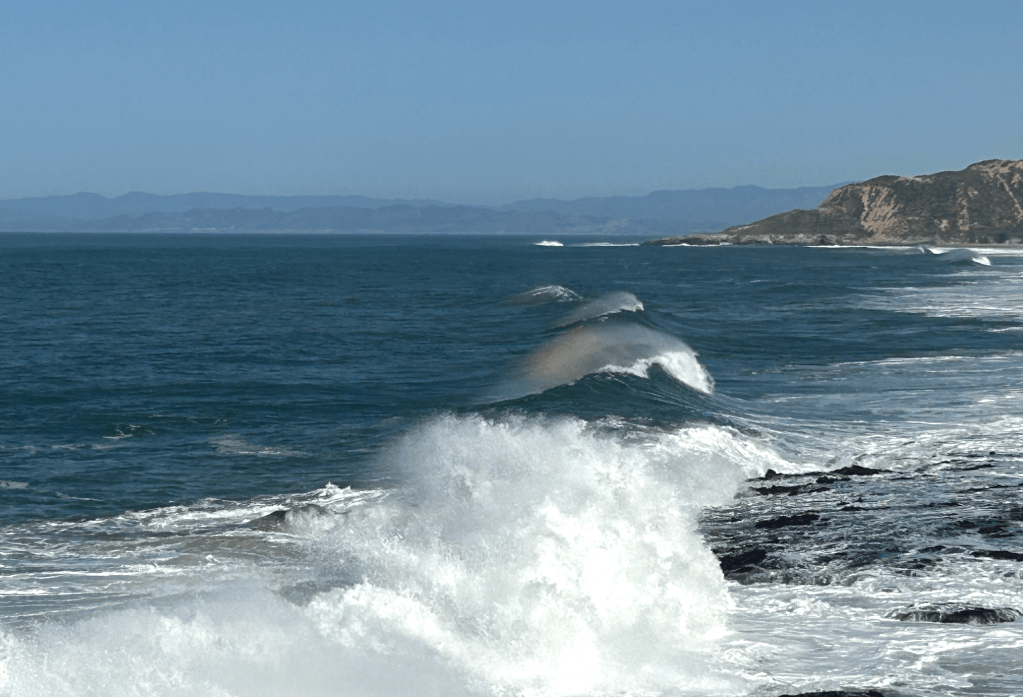
Wave rainbows
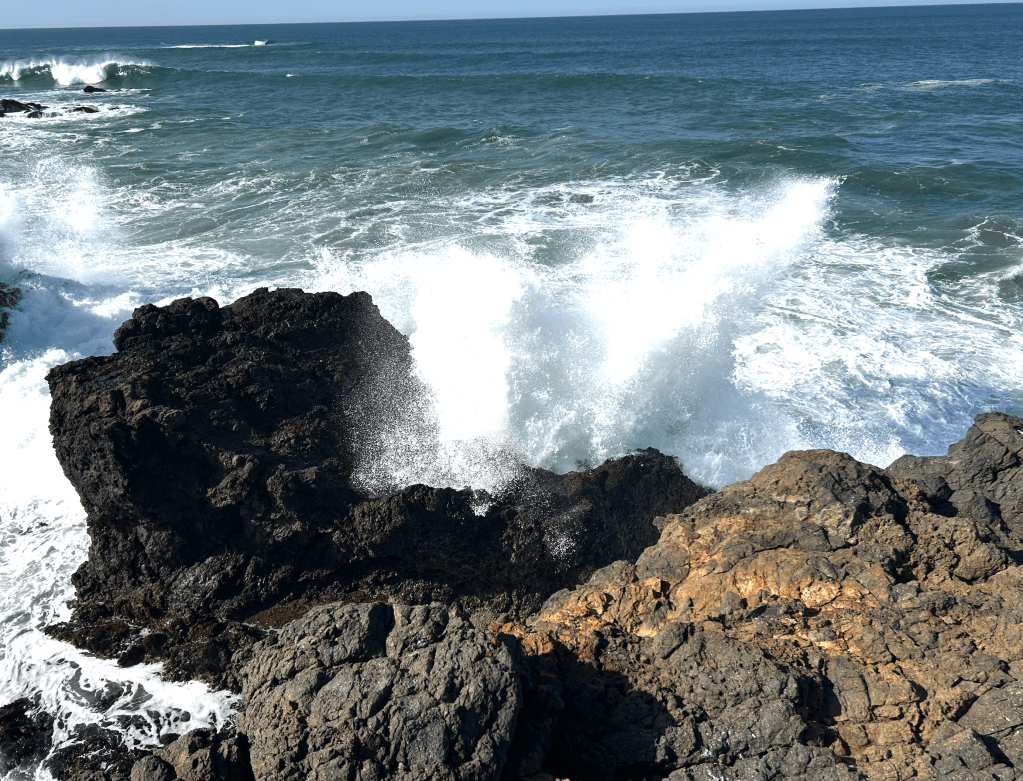
The second was an eight-mile hike in the Montana de Oro state park a half hour north of us. There was a short two-mile/1500 vertical stint up to the top of Valencia Peak and then a descent to the two-mile Bluff Trail that went along the shore. The craggy coastline was jaw-dropping. Parts of it just looked too cool to be real – more like a movie background. It took close to two hours to cover the two-mile trail. Too many places to stop and gawk.
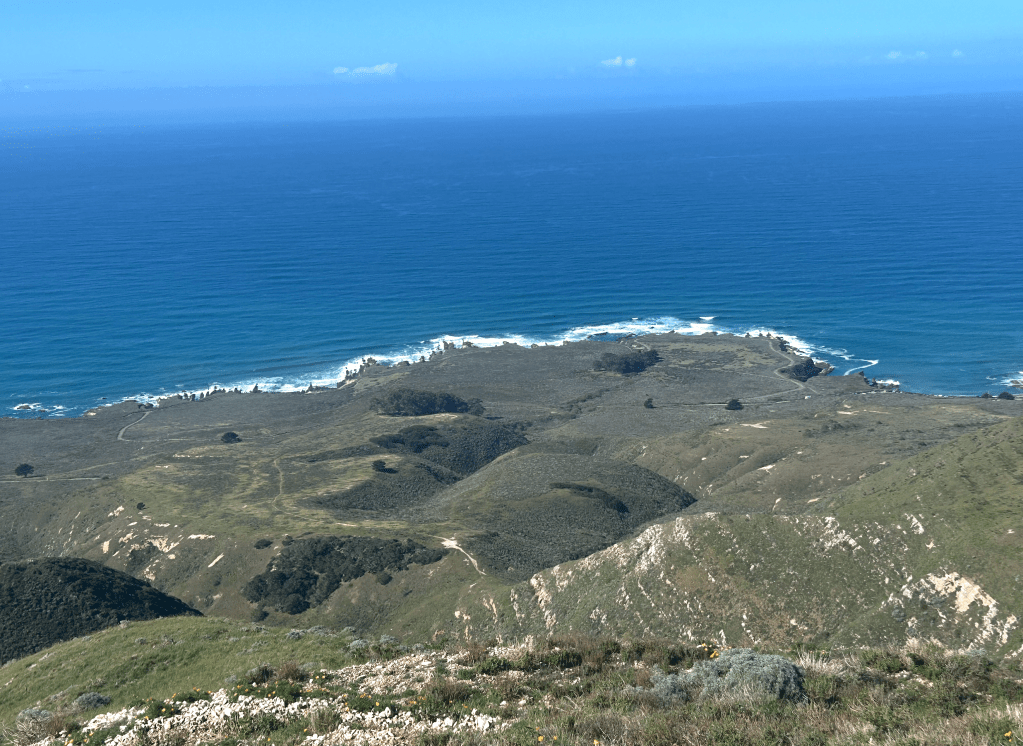
The view from Valencia Peak
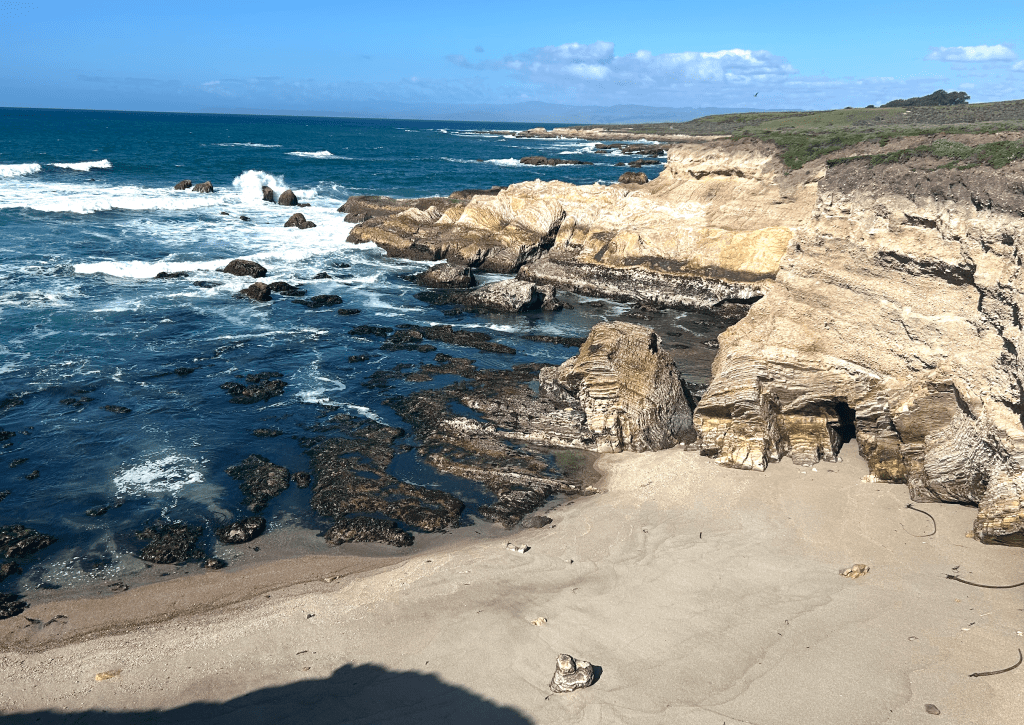
The view is much better close up! Unfortunately there is no way to get down to those beaches…
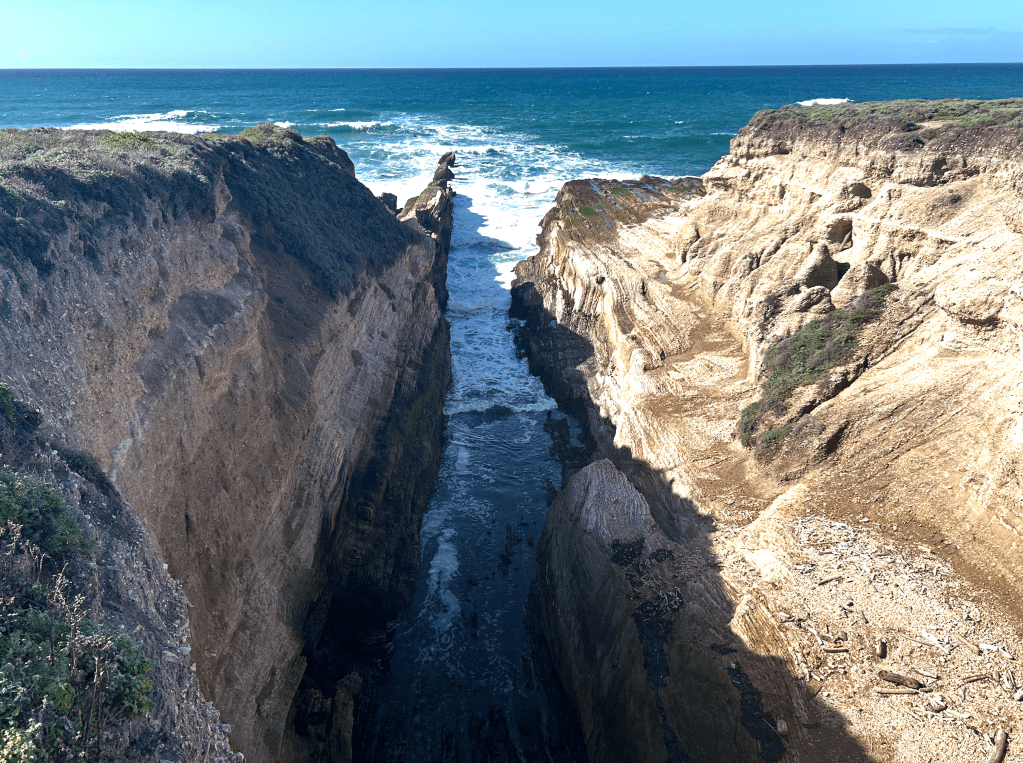
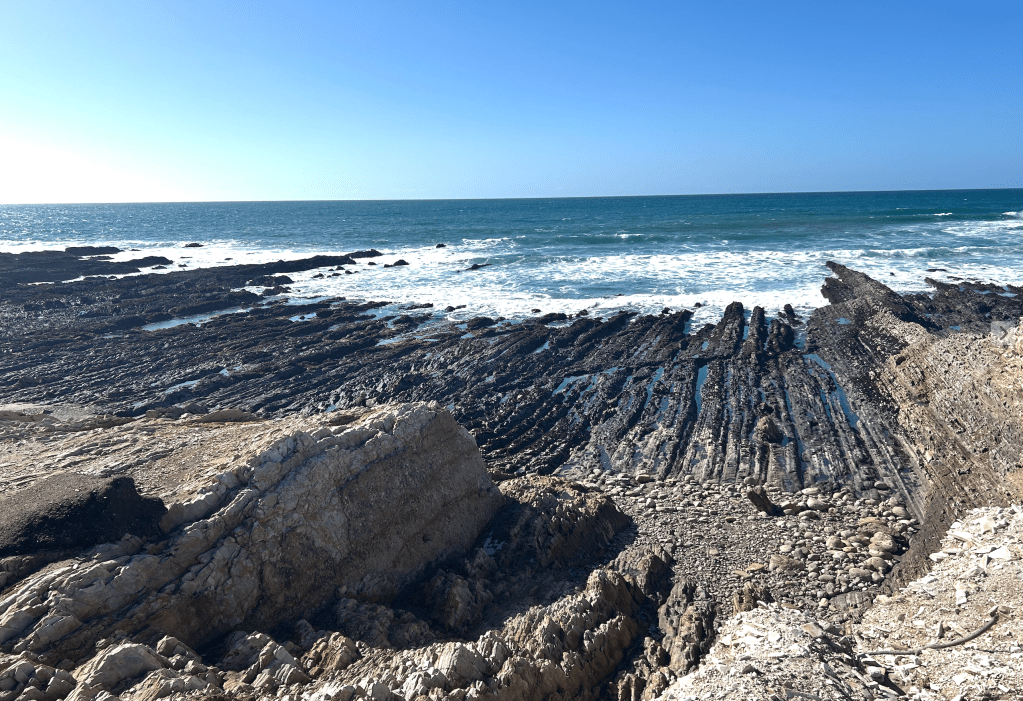
What exactly is that stuff??
Framed by Space Age Technology
As we enjoyed the natural wonders of the CA Central Coast, we were also surrounded by some of the extreme examples of man’s technological prowess.
The reason the road ends past our RV park is that it turns into an entrance to the Diablo Canyon Nuclear plant. The plant is 12 miles past us perched above the ocean. It is the only operating nuclear plant in California and supplies 10% of the state’s electric power. It employs 1,200 people. It was scheduled to be shut down in 2025, but its life has been extended to 2030. It is a major contributor to the state’s GHG emissions goal and is considered critical to statewide grid reliability. (Unfortunately, it also puts a bunch of fun hiking off limits.)
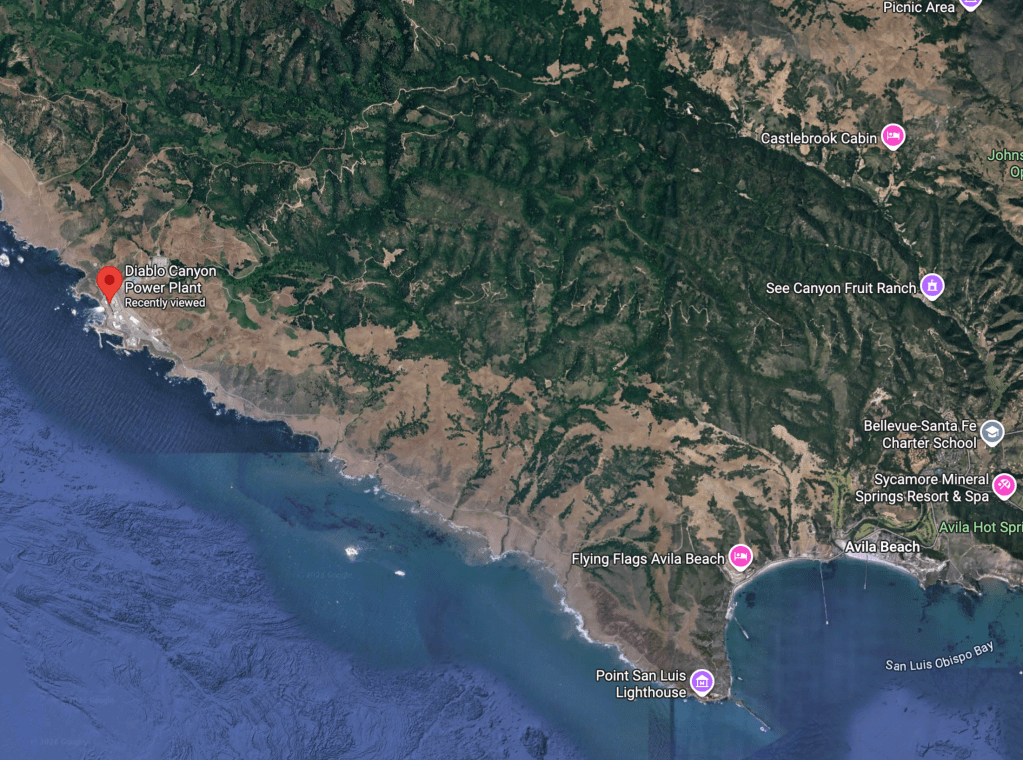
Good thing there was no earth quake while we were there…
Directly opposite the nuclear plant about an hour south of us is the Vandenberg Space Force Base. It is one of several locations out of which SpaceX launches its satellite rockets. We discovered it one day as we were gazing over the bay and there was suddenly this bright line of light rising straight into the sky. It was the only launch we saw. You can see the launch schedule on https://rocketlaunch.org/ but they only give you a “window” as opposed to a precise launch time. Now at least we know where some of the satellites that power our Starlink Internet system come from. 😵💫
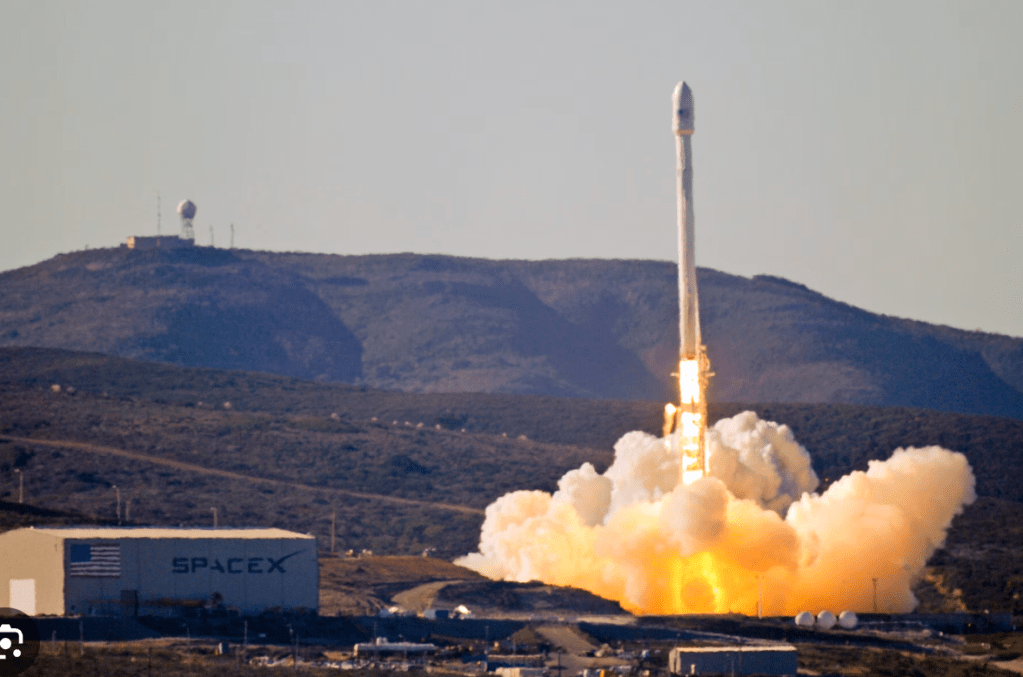
Too bad Elon isn’t on board getting launched into space 😂
Michelle Makes Another Friend on the Road
We had neighbors parked next to us at the Avila RV park in a large “diesel pusher” mobile home. We had talked with them casually, as you tend to do when you are emptying your grey and black tanks because they are on the side facing the living side of their trailer. But it took a dog event to move the relationship to a different level.
We had put our youngest pup, Wren, in the small outside metal pen we carry with us. We failed to notice that the pen door was unlatched. While we were back in the trailer, Wren took the liberty of pushing the door open and taking off to explore the neighborhood, unfettered by the obnoxious constraints of a leash. (Free! Free at last!) When we saw that she was gone, panic, of course, ensued. It was dark and we didn’t know where to looks. What gets Wren’s attention is any kind of squeaky ball, so we wandered up and down our RV lane squeezing obnoxious squeaky balls – all to no avail. Of course, you can imagine the tragic outcomes we immediately fantasized about – eaten by a coyote (one of which I did see in the park earlier); stolen; lost and wandering in the local woods; etc., etc.. – all of which were radically unlikely.
We eventually found Wren with our neighbors Cathy and George, next door. She was in Cathy’s arms, and she gently handed her over to Michelle, who was massively relieved and grateful.
Out of this, the spark of a relationship was born. The next day, Cathy invited Michelle to sit at their picnic table, and they talked for two hours about everything, their professions, children, grandchildren, traveling, their dogs, holiday decorating, close friends – everything except politics. When it became clear that the two of them were of different persuasions on many issues, they found gentle ways to move around those discussions and focus on their commonalities. Michelle was drawn to Cathy’s kind and gentle nature, which was a gift in and of itself. As Michelle likes to say: “Good people everywhere!”
Cathy and George lived 15 minutes south of the RV park in Arroyo Grande and came up to Avila Beach occasionally just to enjoy the view and the vibe. The next day, Cathy invited Michelle to join her for brunch at her favorite local restaurant, which she eagerly accepted. They talked for another three hours.
These kinds of deep but transitory relationships are cherished gems of life on the road.
Extraordinary Beasts of the Sea
The elephant seal is the largest seal in the northern hemisphere, with the males weighing up to 5,000 pounds and the females 1,800 pounds. We were blessed to have the largest elephant seal rookery on the Pacific coast, and one of the few that is easily accessible to the public, an hour north of us near San Simeon. The Piedras Blancas rookery hosts up to 24,000 seals each year. They come in to birth their young and mate and then head out to sea for 8-10 months. They can dive up to 5,800 feet for two hours at a time. When at sea, the males and females travel alone. The males travel as far north as the Aleutian Islands. The rookery beach is a delightful cacophony of sound and motion, with the bulls bossing everyone around, pups screaming for milk, females jostling with each other for space, and everyone flipping sand on themselves to stay cool.
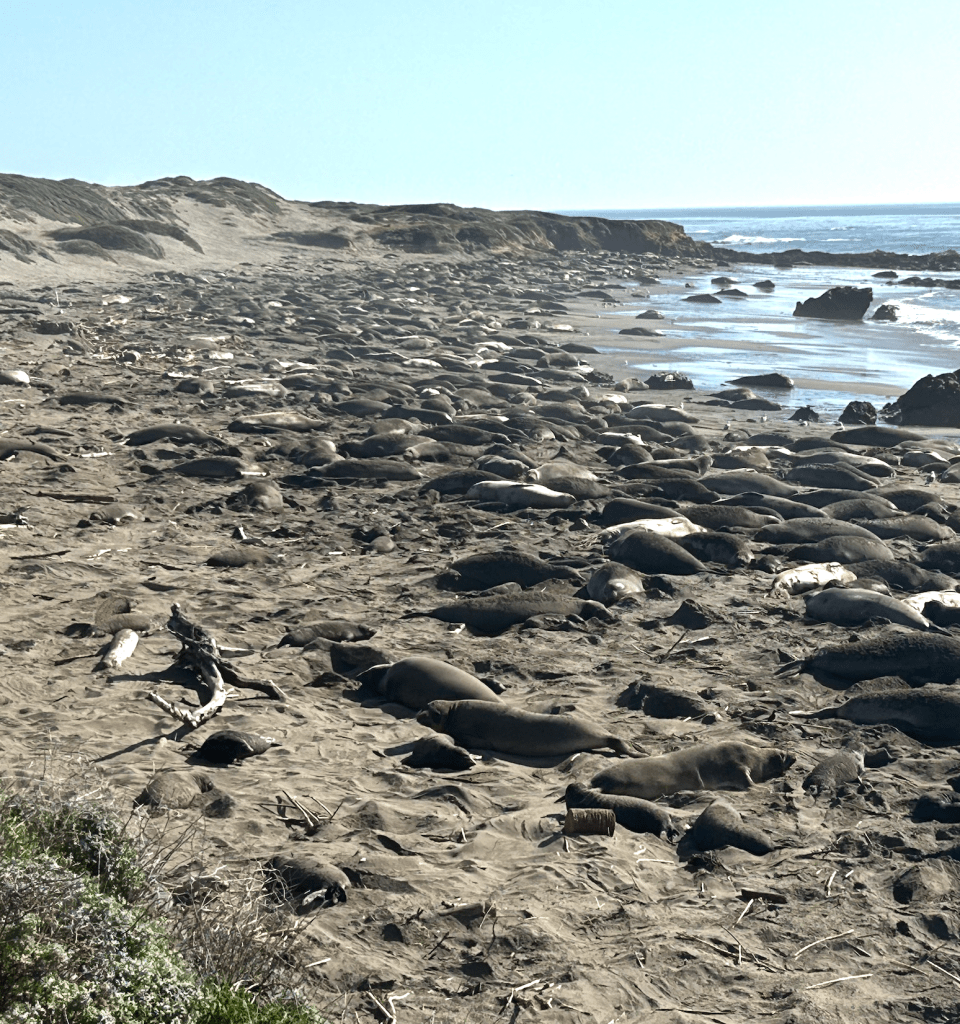
That’s a lot of seal flesh!
About The Benefits of Feeling Awe
It is hard not to feel a sense of awe when getting to know a species like the elephant seal — or the bar-tailed godwit, which just happened to be featured in a Washington Post article the day after our rookery visit. One tagged member of this species flew from the coast of Alaska to southern Australia in one flight – 8,321 miles over 264 hours — that’s 11 days, without touching down on water or land, without anything to eat or drink.
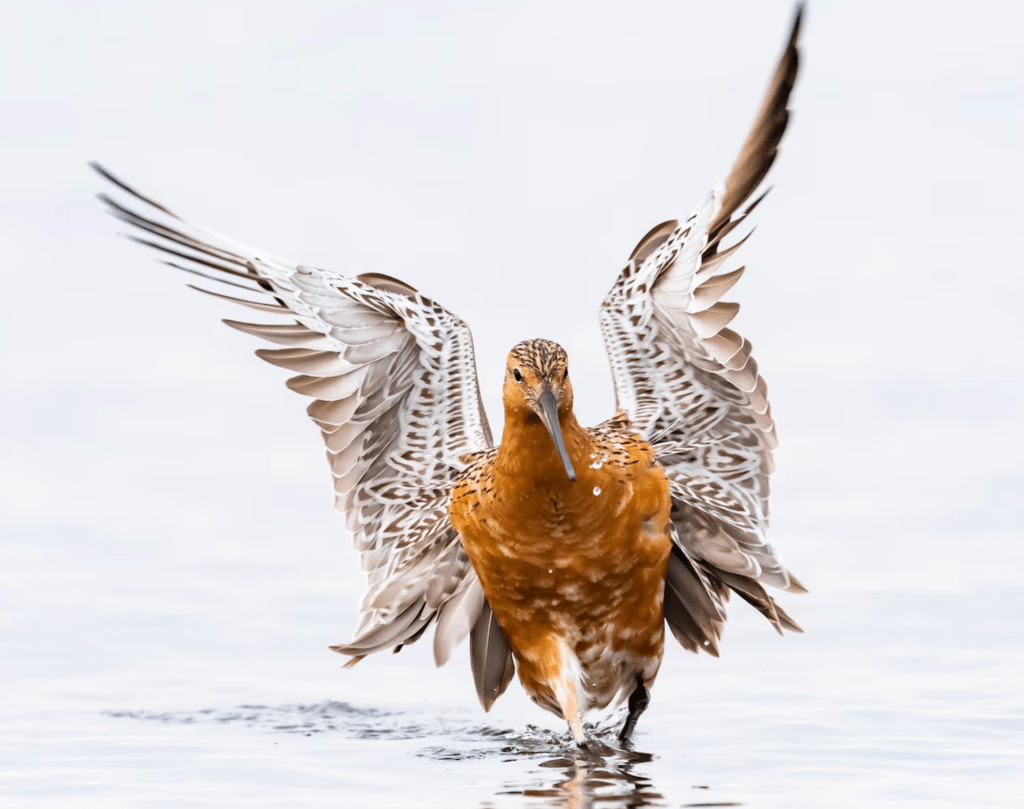
Seriously — 111 days in the air???
Aside from the extraordinary cellular metabolics needed to stay fed, consume fluids and sleep, there is the mysterious question of how they know where to go, having never done the trip before and doing it alone without parents. Scientists have some extraordinary ideas as reflected in this paragraph which is in equal parts incomprehensible and totally awe-inspiring:
“Incoming photons striking the migrating bird’s retina create a phenomenon called “quantum entanglement,” in which molecules of a pigment known as cryptochrome 1a come to share electrons (they are known as “radical pairs”). Because these radical pairs of cryptochrome 1a have a magnetic polarity, they seem to allow a migrating bird to “see” Earth’s magnetic field lines linking the two poles. Moreover, the bird appears to also be able to gauge magnetic inclination (the dip of the magnetic field lines when approaching the pole) and intensity, which allows it to determine its latitude.”
We couldn’t agree more with the article’s concluding paragraph:
“Given the state of the world, we humans shouldn’t need another reason to be more humble about ourselves, but even a quantum physicist who is also an Iron Man aficionado [that’s the author] could only marvel at the bar-tailed godwit. We live in a time of tech wonders, but science still can’t fully explain how a young bird leaps across the Pacific on its very first migratory flight. There is much left to learn about the world.”
Which brings us back to the practicality of awe. This week, a New York Times article celebrated the experience of awe in the context of the extraordinary performances of Olympic athletes. They cite the research of Dacher Keltner, a psychologist at the University of California, Berkeley who: “has spent decades studying what happens to us when we experience awe. It isn’t just a pleasant feeling. His research suggests that awe allows for a neurobiological reset in which hormones are released that lower pro-inflammatory cytokines — metabolically expensive molecules linked to stress, depression and chronic disease.”
Apparently, you get the fullest amount of these benefits if you practice “beholding” – paying close attention to the amazing with a small sense of self. They conclude: “Keltner’s research shows that frequently, the experience of awe is related to generosity, an inclination to help others and prosocial feelings of trust and connection. This isn’t wishful thinking; it’s measurable behavioral change.”
We are counting on our Grand Adventure to improve our capacity to behold, to expand our experience of awe and to lower our “pro-inflammatory cytokines”. How is that for an argument for traveling cross country?
Until next time, we send our love to all of you!
John, Michelle, Raven, Wren and Bob
 John and Michelle's Grand Adventure
You must be logged in to post a comment.