[GEEK WARNING – This blog is dedicated to wine. It contains lots of wine “gory details” and not much other Grand Adventure information. More coming in the future, of course. If wine doesn’t interest you, you might want to skip it.]
We spent a total of three weeks in the Napa Valley. We stayed at the county Skyline Wilderness Park 5 minutes outside of downtown Napa. The RV park is quite small, with about 10 sites with full hook up and another 20 or so with just electric and water. But the park itself is large – 850 acres of hiking trails, mountain biking, disk golf, horse riding, etc. It was a bit rustic but ended up being a delightful place to stay. We often had 10 or less RVers with us in total. The park is bounded on the other side by vineyards, is 10 minutes from a Wholefoods (very important!), and with the entire Napa Valley vineyard region to the north of us.
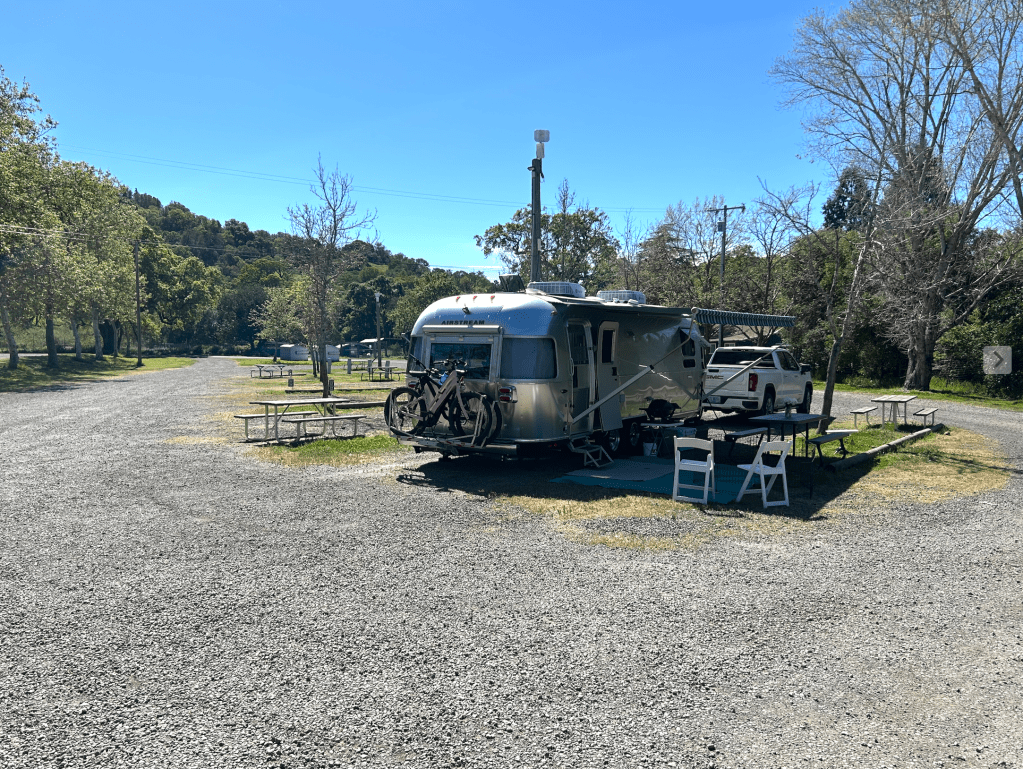
Another private park feeling day at Skyline Wilderness Park
The Beginning of a Wine Journey
When you are in Napa Valley, you can’t not think about wine. Accordingly, it drove me to relive my own wine journey. I became seriously hooked on wine the year I turned 21, and I blame it all on my mother and my English teacher, AO Smith.
AO Smith was an iconic character at Milton Academy, where I served my high school years (and where my father was also a teacher). I took AO’s course in Shakespeare in my junior year (1969). AO had a habit of flashing you the “bullshit” sign with a wild grin and fiery blue eyes bulging under a military-style brush cut whenever you tried to answer one of his questions and it was clear you were “plumbing the depths of your ignorance” as you did it. His pastimes included bourbon, cigarettes, betting on NFL games (which of course back then was very illegal) and wine.
By the time I met him, AO had a side gig as one of the better-known wine tasters in the Boston area, helping others build their cellars. He specialized in European, and particularly French, wines. He built his pallet during WW II when he was stationed as a US fighter pilot with the RAF outside of London. England was one of the main buyers of European wines and back then the best wines in the world were eminently affordable. AO and his peers would pass the long empty times between bombing runs tasting first and second growth Bordeaux’s and the finest red and white burgundies.
For my 21st birthday, my mother Char conspired with AO to get me a mixed case of wine to introduce my pathetic pallet (reflected, I am sure, in the fact that I was captain of one of only two speed beer drinking team at Yale…and that I grew up in a family where the Thanksgiving wine was Matus Rose, the primary virtue of which was that you could make cool lamps out of the bottles) to the wonders of fine wine. The case included a mix of new world and old-world red and white wine. I only remember two of them – a white Suduiraut sauterne and a red 1966 Chateau Gloria (Saint Julien), both from Bordeaux. I left the case at my parent’s house (had I taken it to college it most certainly would have rapidly disappeared) and drank occasional bottles on visits home. There were remnants left when I moved to Lansing, Michigan a year later when I graduated.
It was the 1966 Ch. Gloria that “turned me” – as irreversibly as the dreaded vampire bite.
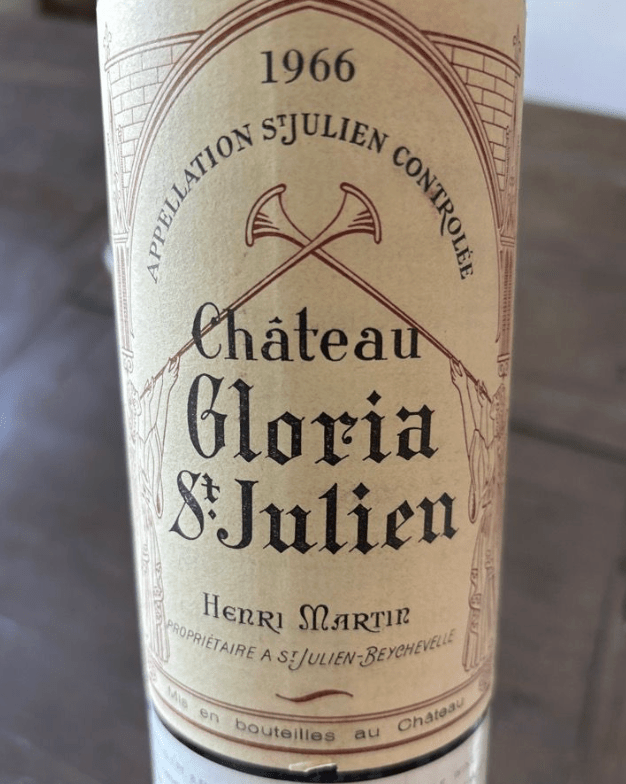
The wine that turned me into an oenophile
I was working for a joint House-Senate committee looking into ways to best “deinstitutionalize” the state mental health system and living in a house near the Capitol building with four roommates (a fascinating crew – one of whom was Dave Bonior who went on to be the House Minority Democratic Whip in Congress). We rotated weekend dinner hosting responsibilities and my weekend was up. I planned something involving meat and decided to include the 1966 Gloria in the menu. In advance of the cooking, I opened the bottle to taste it. Then (yes – I confess!) I “pulled a Nixon”. This is the NYT description of this move: “Nixon would instruct stewards to serve his guests a cheaper, lesser-quality wine while he drank an expensive, top-tier Bordeaux—often a 1966 Chateau Margaux—from his own glass. The practice became so well-known among those familiar with his dining habits that it was referred to as “pulling a Nixon”. The 1966 Gloria (ironic that it was the same year that Nixon favored) was a decent wine from a decent vintage, certainly not a Ch. Margaux, but I remember the flavors to this day, the classical Bordeaux earthiness with layers of “cigar box, earth and gravel” that revealed themselves sequentially as it passed over my pallet. The guests never had the opportunity to experience this…
I was hooked. I sought out local wine merchants, went to tastings, bought wine books (including Hugh Johnson’s World Atlas first published in 1971 and now on its 8th printing), started a small “cellar” (in a closet), and most importantly drank a lot of wine. When Michelle and I moved full time to Tamworth, I had access to my Dad’s unfinished and unheated basement (which served as a decent cellar environment) and I spent about a decade building up a cellar (dominated by Bordeaux, Rhone, and Tuscany) that peaked at 600 bottles and spent the next decade drinking it down to the point that when we left on this trip I gathered up a case of the last stragglers and gave them to Sam and Tammy to make sure they got drunk before they went over the hill. They happily obliged. During this time, Michelle and I also traveled to Germany, France, Portugal and Italy and got to experience European wine first hand.
In Lansing, I was fortunate to be starting my wine journey in the middle of a serious depression in the French wine industry in the late 70s, characterized by economic stagnation, market saturation, overproduction, and damaging scandals. (The 1966 Ch. Margaux that Nixon horded was selling for less than $25 at the time. A comparable vintage today would sell for over $1,000.) As a result, I was able to afford wines which today are totally out of reach.
The 1970s was also the time when American wines, and specifically Napa Valley wines, landed on the international wine scene. The pivotal event was the 1976 “Judgement of Paris” wine tasting. To the astonishment of everyone, a Napa Valley red wine (Stag’s Leap 1973 Cabernet) and a white wine (Ch. Montelena 1973 Chardonnay) won first place in their categories, beating iconic French wines like the Ch. Mouton Rothschild, Ch. Haut Brion (Bordeaux reds) and Puligny-Montrachet (Burgundy white). Nine of the eleven judges were French, so they couldn’t argue about biased tasting. The results created a serious earthquake in the global wine market. Renowned European vintners started coming to Napa Valley and other California regions.
In 1976, Napa Valley had an estimated 50 wineries – today it has over 500, a ten-fold increase. An estimated 25 of these wineries have French and European ownership or JV relationships. (Stag’s Leap, the winery that won the red competition in 1976, is now owned by Antinori, one of the large Italian producers. The Rothschilds, whose wine lost out to Stag’s Leap, is now a JV owner of Opus One, a top producer of cabernet wines.) Top vineyards in Napa can sell for in excess of $1 million per acre, and grapes from top vineyards (like To Kalon) can sell for $20,000 to $40,000 a ton, meaning just the juice in one bottle costs $55, easily leading to wines that retail for $500 or more.
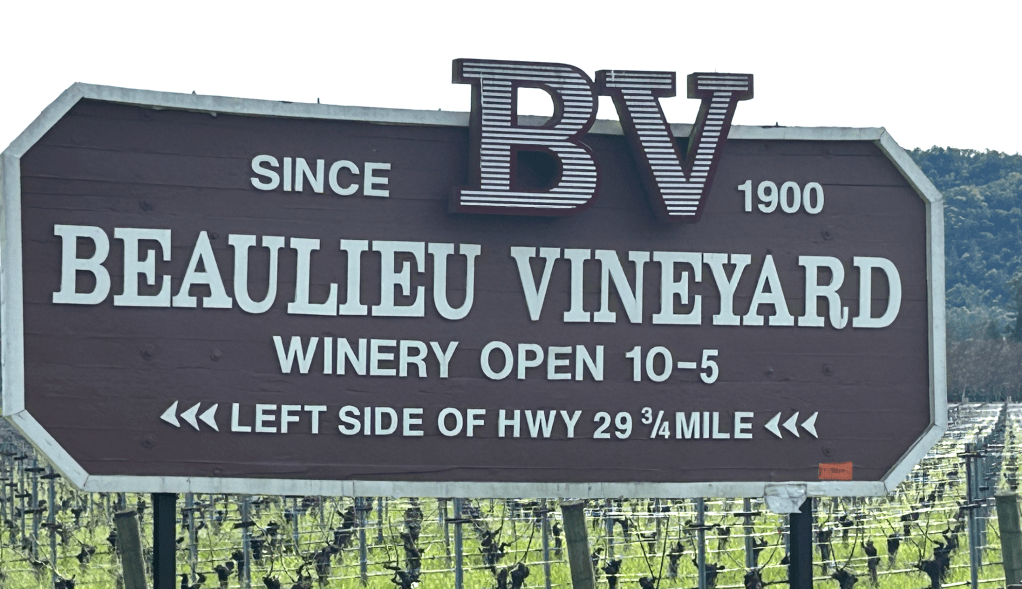
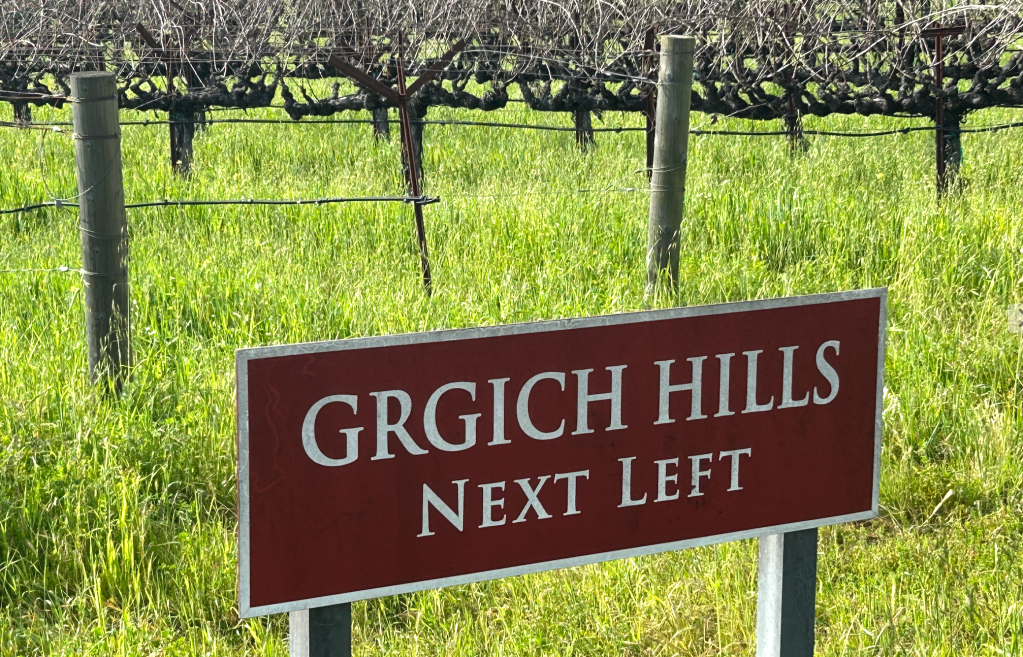
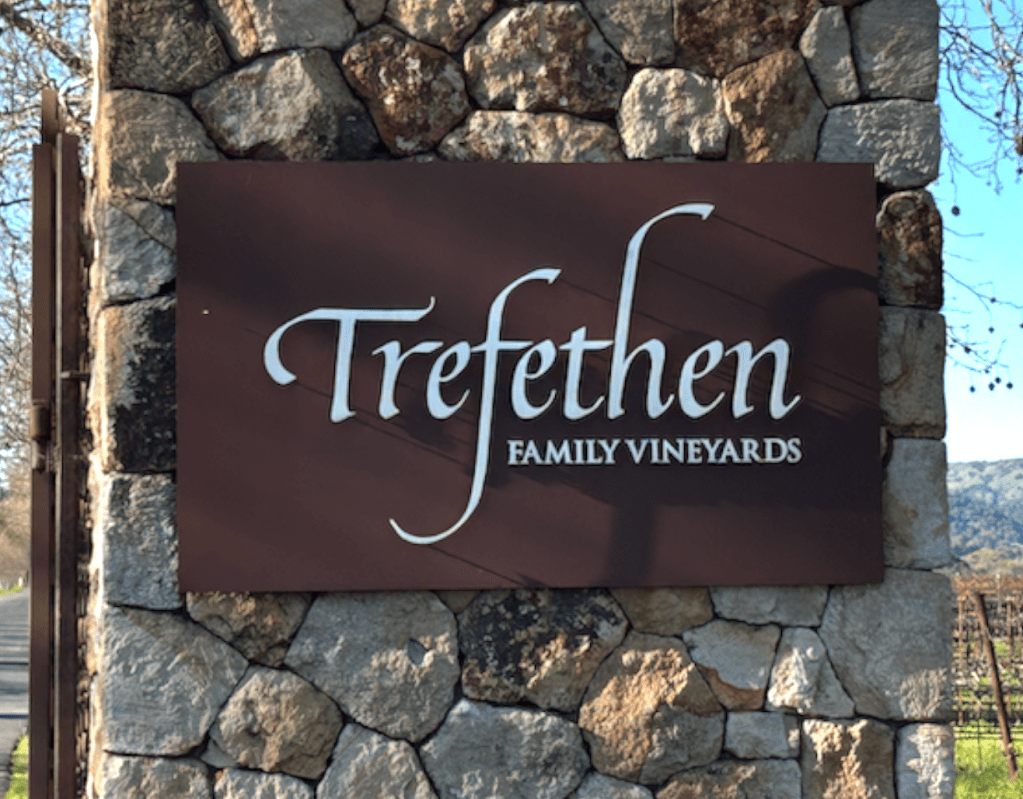
Familiar Napa names
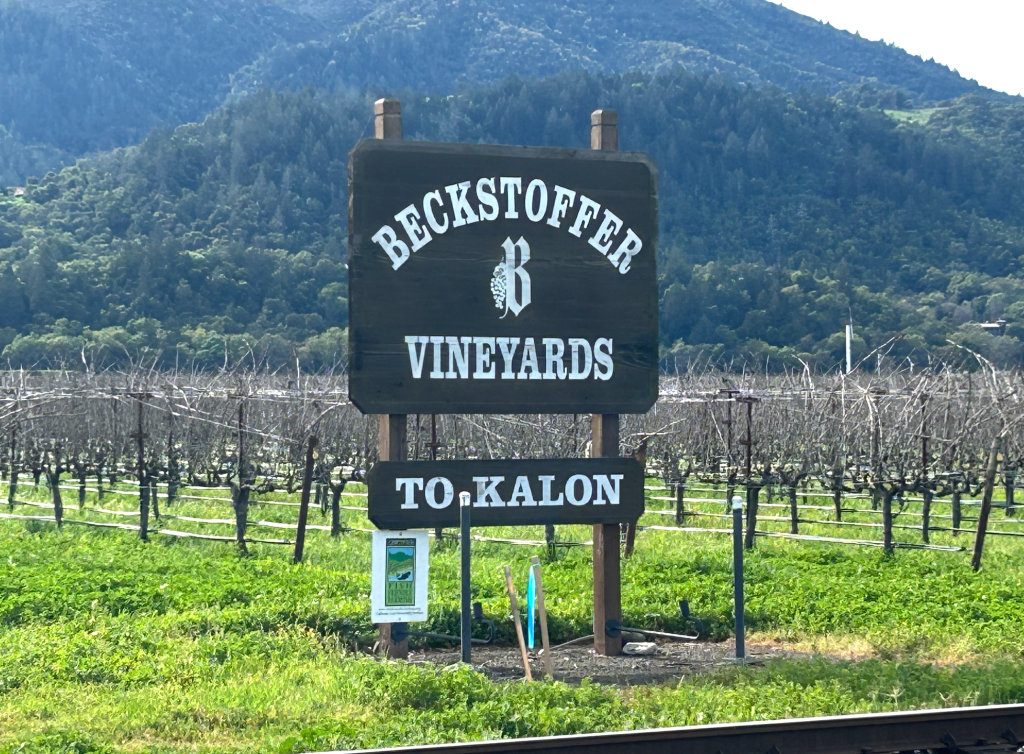
Some very expensive juice…
I found that Napa Valley in general has a price inflation problem. It is very common for good cabernets to retail for $100 or more. As an example, our RV park bounded a Paul Hobbs vineyard in the Coombsville AVA (America Viticultural Area). I figured it would be fun to have some of the wine as a remembrance of our visit. That didn’t work out. The Paul Hobbs Coombsville Cabernet started at $120. I’m always wondering – who buys these tens of thousands of cases of wine costing $100 to $500 or more? Are there really that many people with that much disposable (drinkable) income? Go figure!
Hooked On Vines
In the 1980s, my wine obsession took a deeper turn. I decided to grow my own grapes and make my own wine. My ex-wife and I were living on a small farm south of Lansing at the time, so I had plenty of land to experiment with. The climate did not allow me to grow the classical vinifera grape varieties – cabernet, pinot noir, chardonnay, etc. – they could not survive our winters. But it did allow me to grow what are called “hybrid” grapes – crosses between vinifera and American grapes. Wine Enthusiast describes them this way: “French hybrid grapes are interspecific crosses, primarily developed by breeding European Vitis vinifera with American Vitis species to resist phylloxera, cold, and disease. Primarily created in France during the late 19th/20th century, these grapes (like Chambourcin, Seyval Blanc, and Baco Noir) are known for cold-hardiness and lower fungicide needs.” They were originally developed as a response to the decimation of European vineyards by the phylloxera bug in the late 1880s. Europe lost 70%-90% of its vines to the bugs, which ironically were imported from America on American root stock that were resistant to them. I was inspired by an early Traverse City wine maker, Larry Mawby, who successfully made some pretty good wines with the white Vignoles hybrid.
I bought books (no Internet or ChatGPT to consult then!), talked with the Ag Extension agents, talked with other home wine makers, studied trellising systems, bought equipment, bought posts and wires, bought vines and eventually planted a total of two acres of grapes. (If one acre is good, then two acres must be better, right?) I loved the whole process! I made a lot of wine – red and white, and tortured my family and friends with it, all of whom felt obliged to claim they liked it when they probably didn’t – or at least shouldn’t have! I even fantasized about building a small winery and go to far as to do a footprint outlay and estimate concrete, timber, and barrel costs. Thank goodness I didn’t act on that fantasy!
This went on for a total of about 10 years (from first vine planted to last vine torn out). The pivotal moment of decline began when I bought a bottle of cheap California chardonnay for under $7 a bottle and realized it was orders of magnitude better than anything I was making. I thought of the pruning, tying, tilling, spraying, picking, crushing, fermenting, decanting, bottling and waiting it took for me to create an entirely mediocre juice – when I could go out and buy something WAY better for a few dollars. It just did not add up. Thus ended my vine growing and wine making career.
Of course, this should not have been a surprise to me. There is a reason mid-Michigan is not a viticultural gem – and I had never seen another vineyard within a 50-mile radius. The weather stinks, and the soil is dominated by heavy clay – the exact opposite of what makes for good wine growing. (Anyone who has lived in the Midwest knows this clay – a brown/blond mineral mix suitable for pottery making when wet; creating a mud season like none other; and as hard as concrete when it dries.) It took the determination and pig-headedness of a Cleveland to overcome those obvious barriers.
I never regretted the obsession, however. What I had learned about viticulture and wine making radically increased my enjoyment of reading about and drinking good wine. I now knew what they were talking about when they detailed the grape varieties, how they were trellised and pruned, when they decided to harvest, sugar levels and acid levels, malolactic fermentation, types of oak (yes, I did do one batch of red wine in an oak barrel – the product tasted like drinking an oak tree and ended up adding beneficial bacteria to our septic system) filtering, corkage, etc. The wine recipe is pretty simple – pick, crush, ferment, decant, bottle – but when you add in all the variations that can be introduced at each step, it creates a near-infinite group of end products.
(I had a brief flirtation with experimenting with Riesling grapes in our field in New Hampshire, but quickly disabused myself of that notion.)
Vine Dreams
One of the things I learned through this experience is that there is something interesting about my relationship with grape vines. When I look at an old vine like the ones above – or even the young ones struggling to get established – and see the rows of them stretching across the vineyards – I get a strange feeling in my gut – actually more like a tingling in my feet – like they are SO familiar, like I want to touch them, like I have done this before, like in some distant past my job was just to nurture them – an enduring déjà vu that calls to me across time and space.
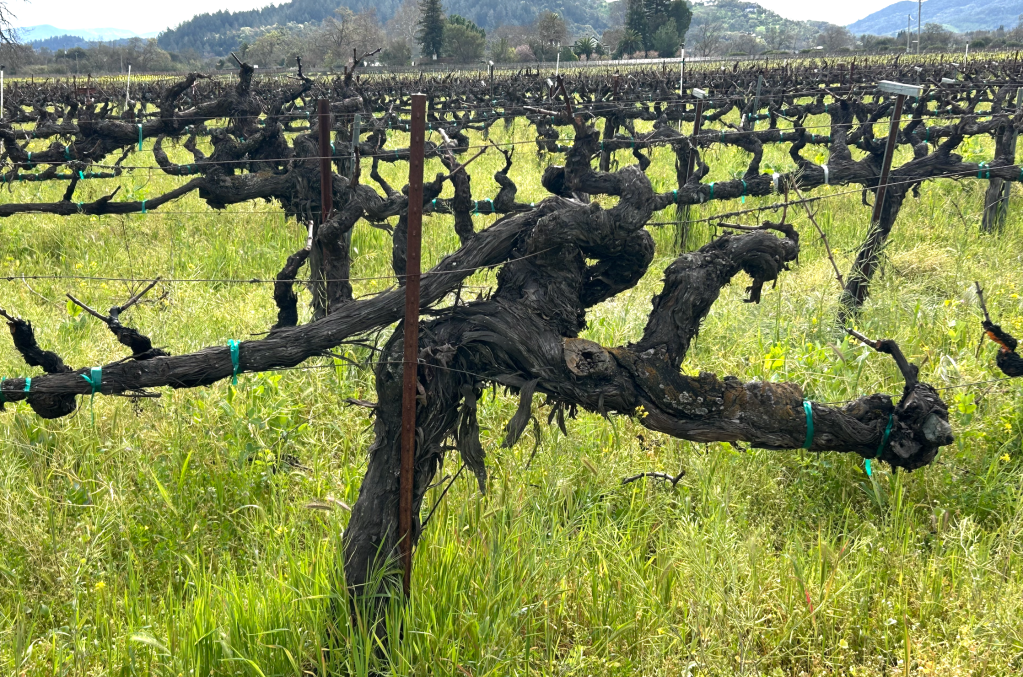
I think the vine is talking to me…
When Michelle and I traveled to France and visited the Burgundy and Rhone regions, it was especially acute. I’ve never really understood this sensation. It remains a delightful mystery.
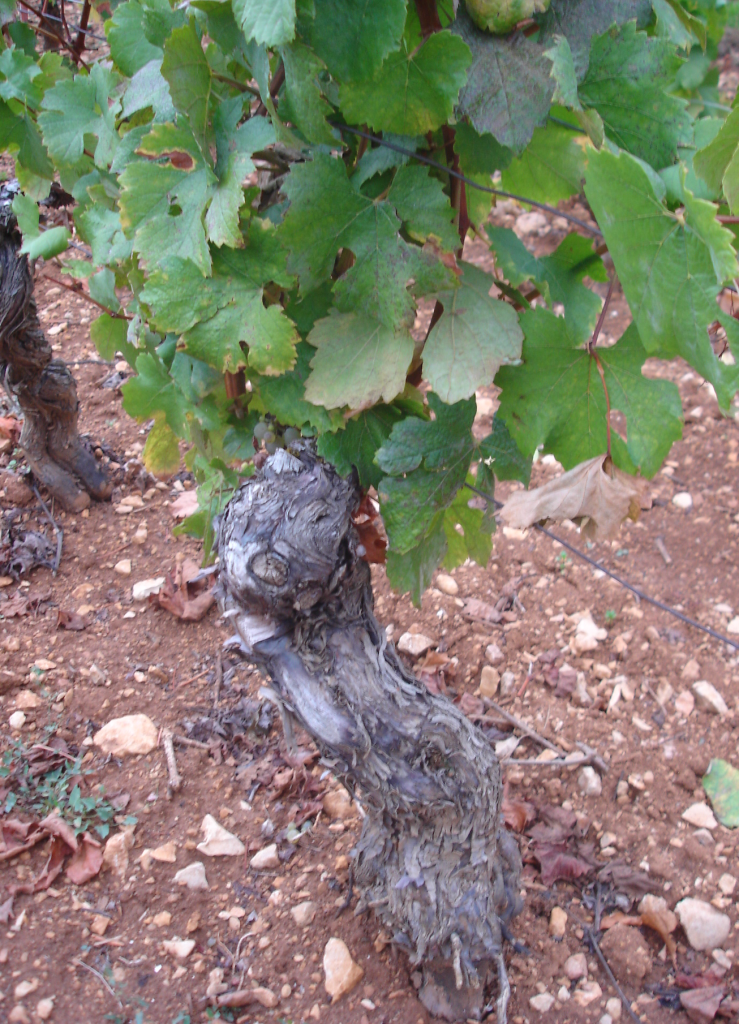
This Burgundy vine is clearly speaking in French…
I never felt this way about the wine making – just about the vines.
An AO Postscript
I kept in touch with AO Smith until his death in 1989. When I would travel back from Michigan to Milton to visit my parents, I would make a point of connecting with him. On one visit, he asked me if I would like to taste some wine. I of course said yes. He pulled a bottle of 1966 La Tache (there is that year again!), one of the wines of the fabled Domaine de la Romanee-Conti burgundy estate. It is a small vineyard of only 12 acres that produces only 1,000 cases of wine. Recent vintages now sell for $5,000-$7,000 a bottle. (No, that’s not a typo. The price has been seriously bid up by scarcity and the growth of billionaires who will pay anything for these kinds of wines and often treat them like investments, not a consumable, leaving them in their cellars way past their prime.) I can remember the taste and texture to this day. It felt like drinking liquid velvet, with layers of indescribable fruit flavors (reviews refer to tastes of “violets, sandalwood and violets”, but I have no idea what those mean…). The term that is often used to describe La Tache that I can resonate with the most is “intoxicating” – and not in the alcoholic sense. AO, of course, asked me: “Is it OK?” – which was clearly a totally silly question!
I haven’t had as a good a wine since then. AO provided the bookends to my wine experience – both 1966 vintages. Thank you, AO Smith!
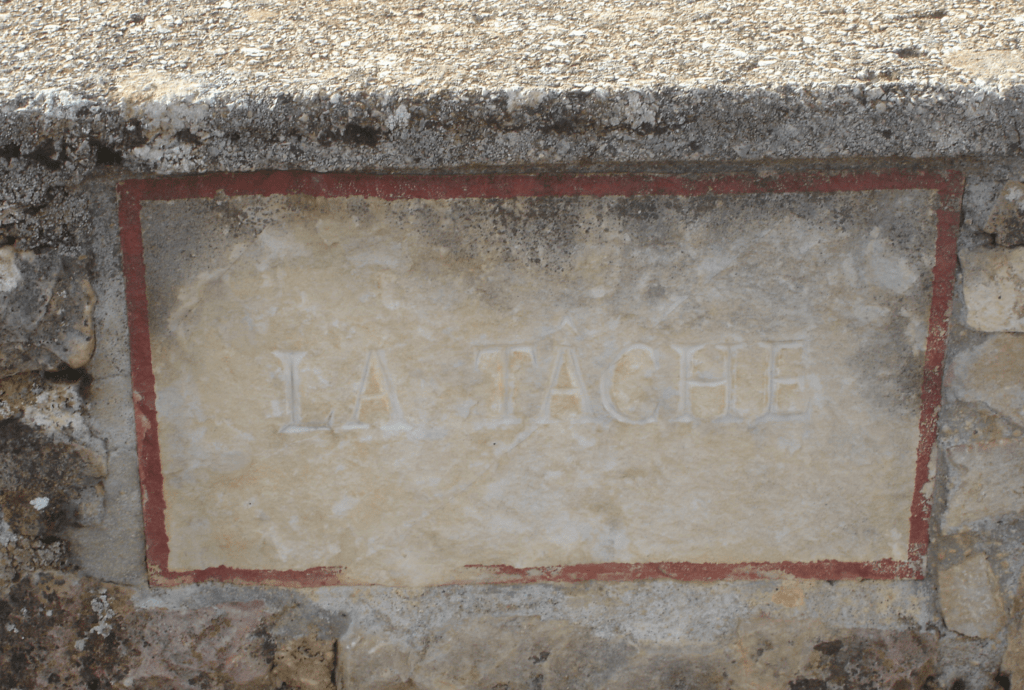
This is as close as I have gotten to La Tache since the AO tasting…
Family Reunion
Most importantly, we were able to have a small family reunion during out visit to Napa. We have kids (son Josh and daughter in law Liz – OK, not really kids anymore since they are in their 40s) who live in Berkeley, plus our daughter Rachel flew out from her home in Western Michigan to join us for a long weekend. We ate together, drank together, hiked Napa Hills (one highlight of which was my first encounter with a rattler) and hiked the Redwood forests and just generally had a great time. We hosted everyone for one night at our trailer where Michelle miraculously whipped up a meal of eggs benedict for five in an Airstream. How does she do it? Magic, for sure.
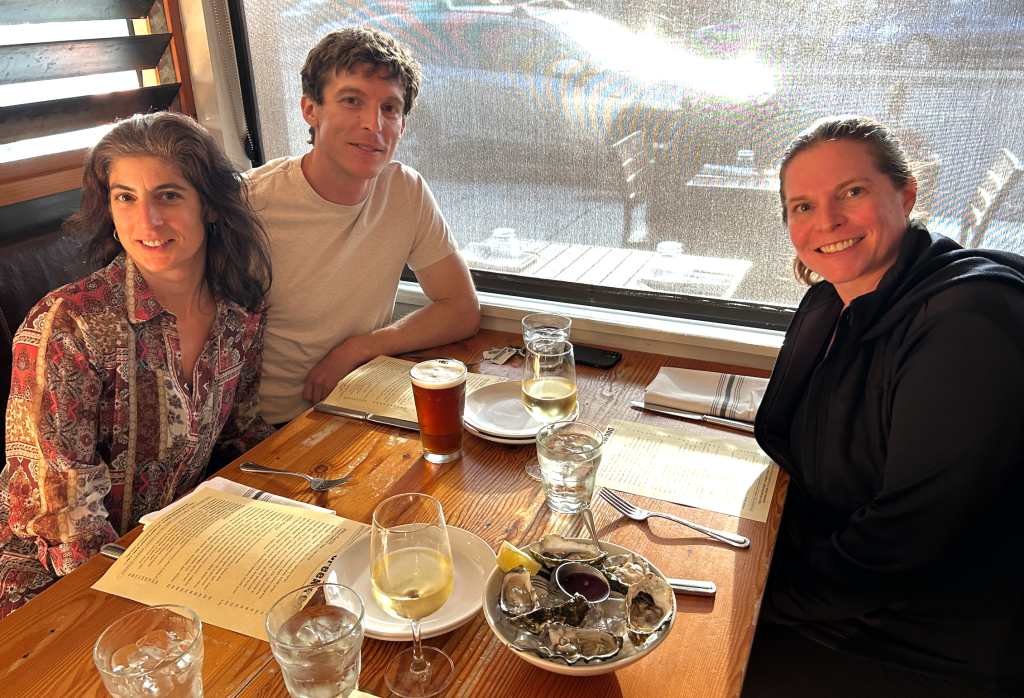
Out to dinner with Liz, Josh and Rachel in Berkeley
All the kids are young masters of the universe of course. Liz works for the City of Berkely, running their local economic development initiatives (which is a great benefit to us since she knows virtually every local business in the city), Josh works for OpenAI (you can imagine what kinds of conversations that sparked), and Rachel runs a business (of which I am a part owner) that uses personality assessments to improve the fit between individuals and their jobs and careers.
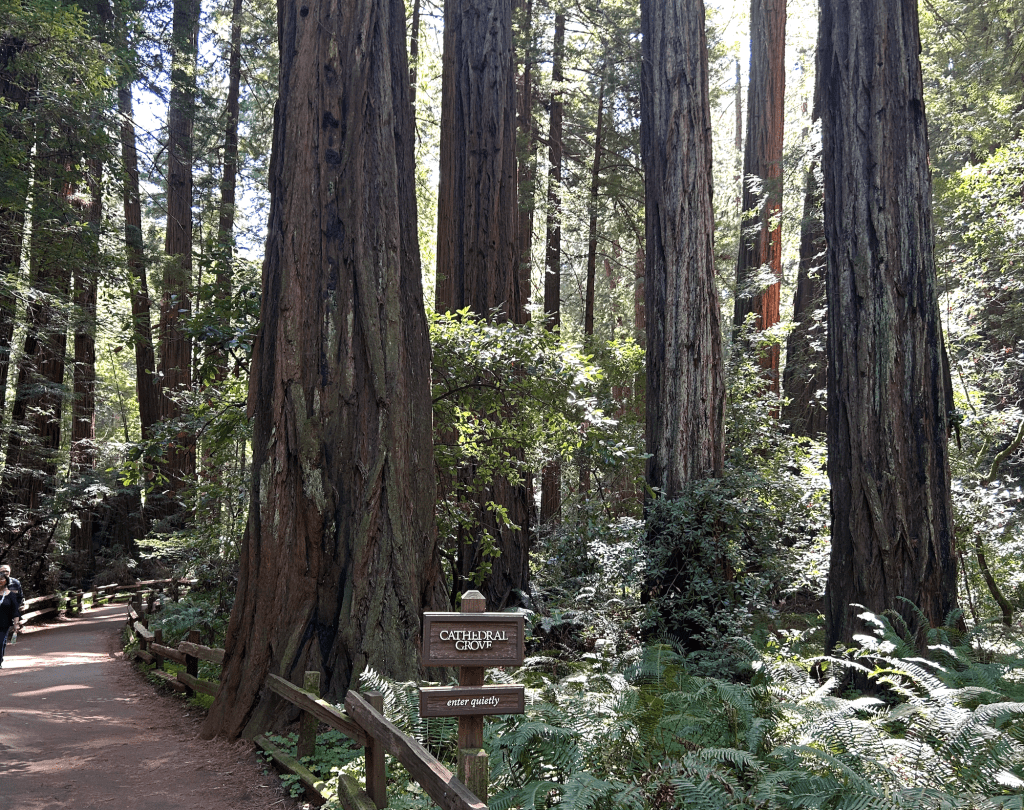
These wise creatures of the forest deserve silence
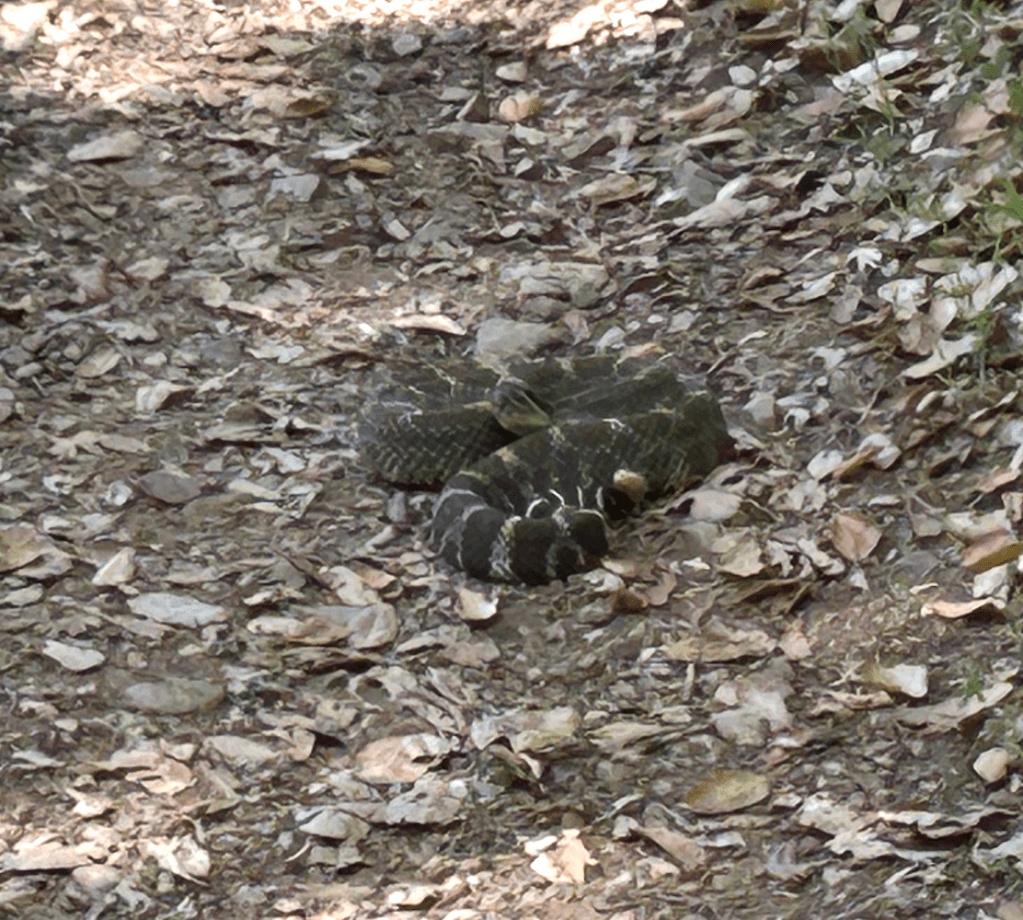
I think he was saying: “Thou Shalt Not Pass!” We obeyed and found a long way around
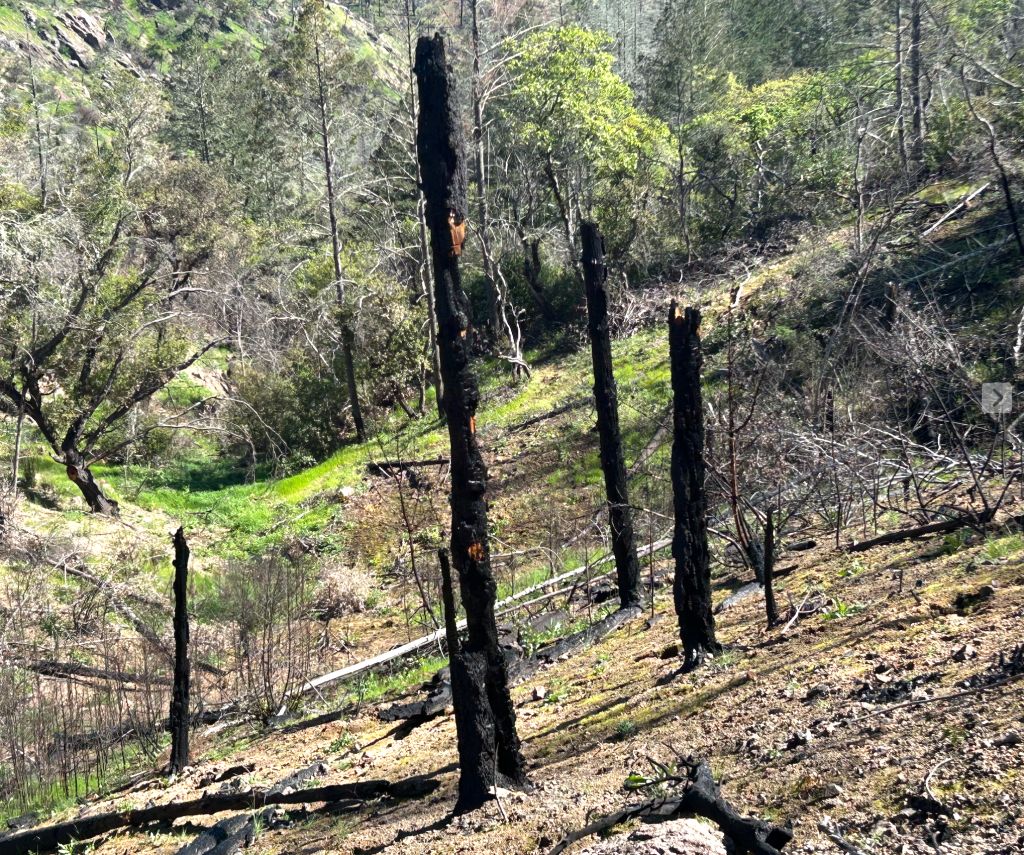
You don’t have to hike far to see the signs of wildfire damage. The Glass Fire in 2020 burned over 67,000 acres in Napa and Sonoma, including many vineyards. Wineries are still rebuilding from the impact.
During our visit, Michelle and I were treated to the experience of engaging with our children as adults, and not as parents. As many of you know, that experience has a delightfully satisfying and freeing feel to it. Of course, you never stop being a parent, but the proportions of time between parent and peer roles shift over time to favor the latter over the former. Especially rewarding were the times when we faded to the background altogether and we could feel the warm interactions between the kids – engaging in dialogue, debate, sharing, laughing and overall great fun among themselves. That glow can last a long time.
Beating the Odds on Away From Home Friendships
One of our early blogs had these lines in it: “This is the bittersweet nature of friendships made on the road. They glow when they are in full swing, and fade like a firefly’s light when you both move on. Like the shifting landscape of neighborhoods, you must treasure them and then let them go. They are a delight not to be missed, and we feel blessed when they happen.” I think this is still generally true, but sometimes you beat the odds.
Michelle (the determined social networked that she is) kept in touch with the friends we made in Ruidoso NM, Chris and Jill (the folks with 5 kids from Tennessee who sold their home and left on the road in an Airstream). As fate would have it, they are now at an RV park in Morrow Bay, 15 minutes north of us. (We are back in Avila Beach for 10 days.) We are conspiring to get together this weekend.
Michelle has also kept in touch with the friend she made the last time we were in Avila Beach (Cathy), and they are planning on having lunch together next week.
Finally, it turns out that another couple we met in Napa (Eurlich and Amanda – new Airstream owners with whom we shared an intense one hour of tips of the road trading) are going to overlap with us at our RV park in Moab, UT.
So the social ecology of the RV world can be denser than you think!
Where To Next
We leave Avila Beach on March 26 and head for two day in Death Valley. From there we go to Utah for the month of April. We plan on getting home on May 9.
Love to you all –
John & Michelle
 John and Michelle's Grand Adventure
You must be logged in to post a comment.