Magnificent Zion; Suffer-free hiking; Long haul driving; Arriving home; Grand Adventure by the numbers; Reflections on adventure traveling.
It’s been about a month since our last blog, and two weeks since we got to our New Hampshire “home off the road”. It felt important to follow the FUBAR blog with something a bit more upbeat!
That said, this is the last “official” blog of our Grand Adventure trip. Thank you all for hanging in with us on this wild ride! A wild ride it has indeed been. Will there be another one? We are certain of that. When? Who knows. We made reservations for February of 2027 at our favorite place in Avila Beach. Whether or not we keep those reservations remains to be seen. Stay tuned.
When Did We Start “Going Home” Instead of “Going Away”?
A friend of ours asked us this question and we hadn’t really thought about it. But on reflection, the markers were clear. It wasn’t simply about getting past the midway point. It was instead about some kind of “pivot” – you know like when you see those amazing figure skaters doing a triple or quad and they launch into the air and then at the top “pivot” to make the descent and get ready to land. Our pivot wasn’t that dramatic (the image of one of us doing a figure skating leap is of course totally incomprehensible and absurd!) We think it occurred when we were in Napa (end of month 5 and beginning of month 6). Was it that we were with family that reminded us of home? That Napa was our furthest Western destination? That I started looking at RV parks for the 8-day march across the mid-country? Not sure, but it did change the experiential vibe. And yes, it felt good.
Magnificent Zion
Before we headed home, we had eight days in Virgin, UT outside of Zion National Park. Zion is the second most visited national park in the country (5 million visitors a year), and for good reason. The terrain and views are stunning.
It had been over ten years since we last visited Zion. The magnificent scenery had not changed, and neither had the crowds. Zion has the most “Disneyland” feel of all the parks we have visited. And it turned out that we were there during the spring break weeks for both Utah and California. The place was mobbed.
I am not big on hiking crowded trails, so I ended up doing hikes mostly outside of the main park area. Many of the coveted destinations in the park (aka the famous Angels Landing trail) require reservations well in advance and can only be reached by the park shuttle. I hiked a 15-mile trail on the far West side of the park (in the Kolob Canyons) and a 16-mile trail on the East Rim. Both were awesome and had the added virtue of lacking the precipitous 1,000-foot drops with no railing – no need to fear getting dizzy, passing out and falling to my death!
We stayed at the Virgin River RV Park. It turned out to be delightful for reasons we would never have anticipated. The park was packed with families and their kids on spring break. We thought that we’d find this irritating. Instead, it was warming and energizing. There was something about the joyful energy of kids and families talking, biking (lots of dangerously fast electric bikes and scooters), walking dogs, grilling, laughing and generally having a great time, that left a pleasant glow with us. We count it as one of our most enjoyable RV stays.
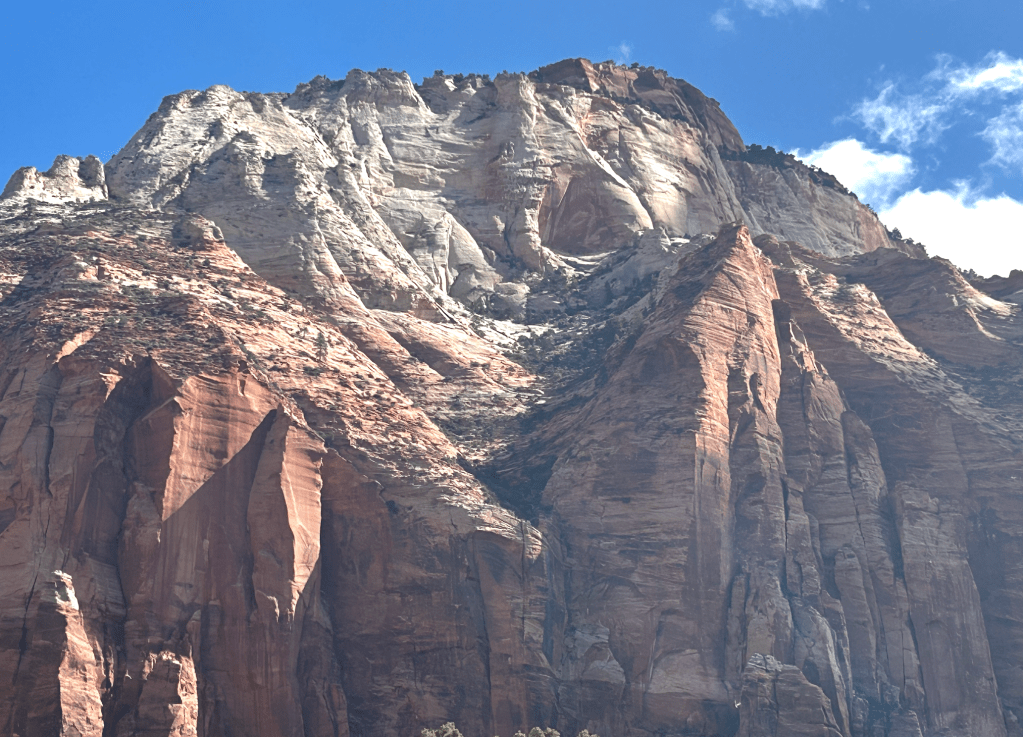
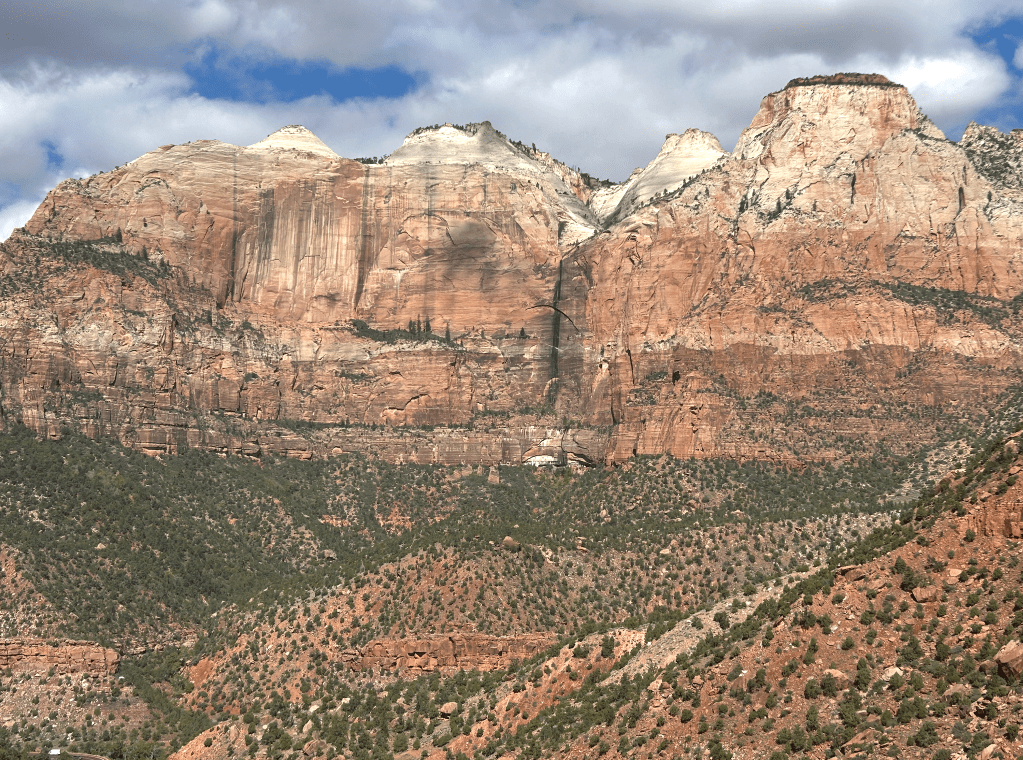
“Magnificent” did end up being the word that best described these mountains.
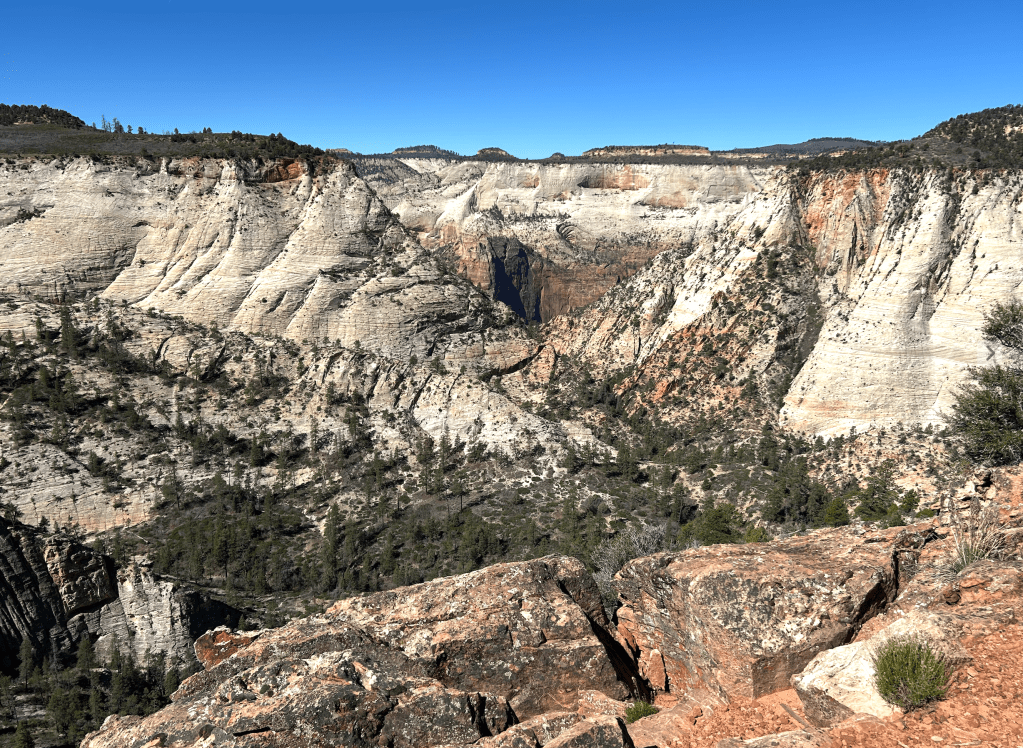
View from the East Rim.
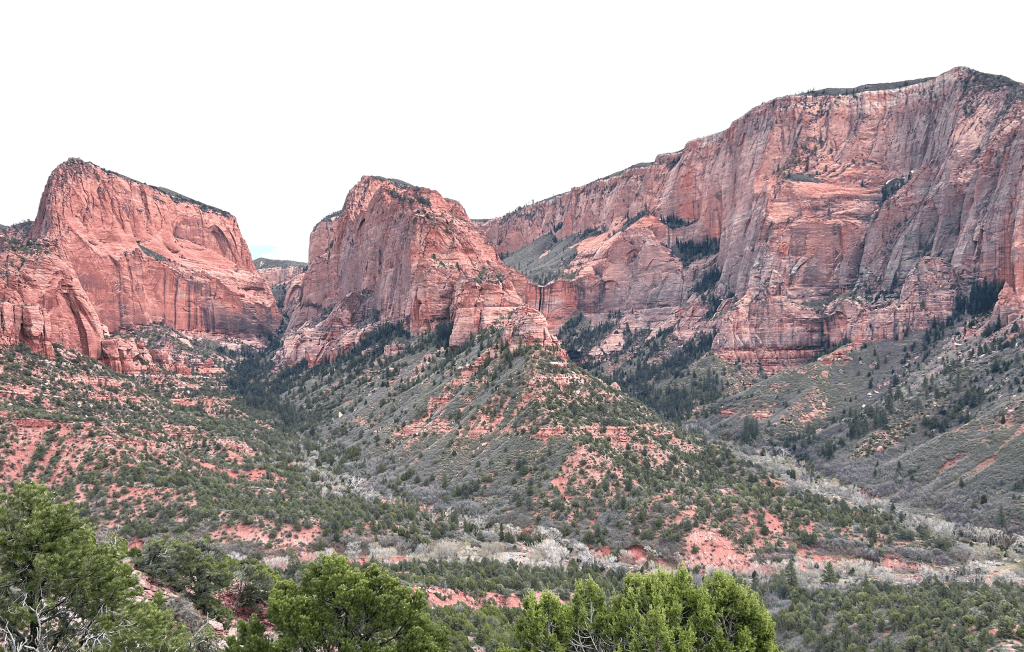
Red rocks in the Kolob Canyon
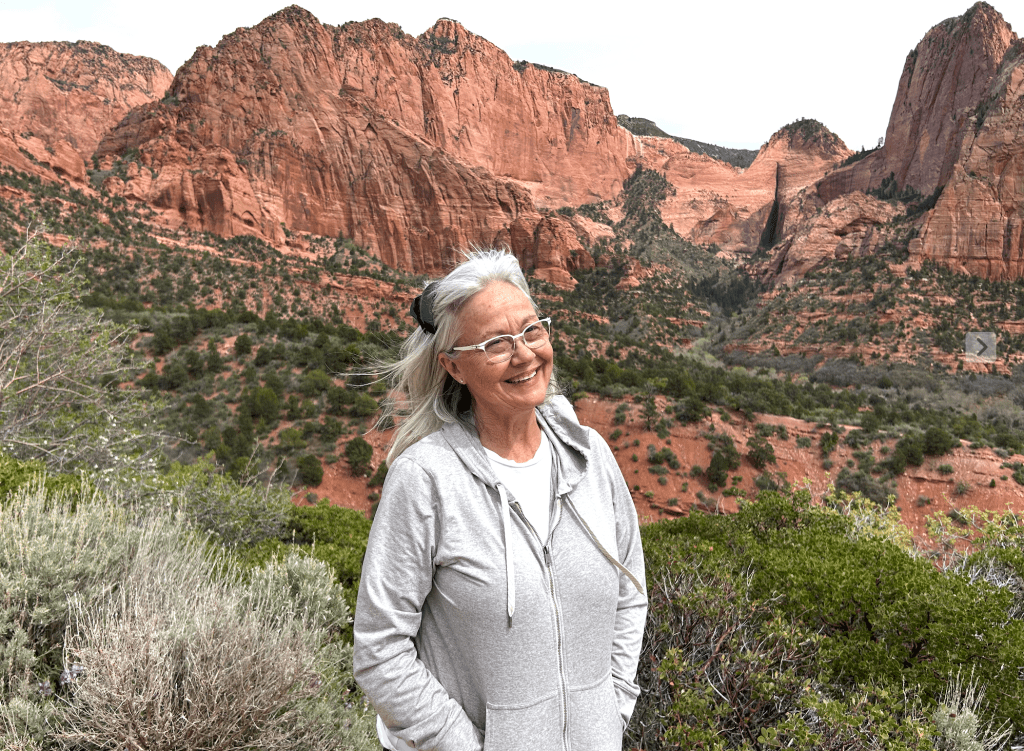
The red rocks make Michelle smile!
If I Am Not Suffering, Can I Still Be Having Fun?
The Zion hikes (which were long, but all less than 2,000 feet of vertical) led me to be asking this question, which had lingered in my thoughts since our hikes with the kids in Napa. The fact that I would ask it reveals my Puritan genes and ancestry! For dedicated hiking enthusiasts, part of the pleasure of hiking is all about enduring the pain of hiking. This is not driven by a masochistic desire to seek pain for pain’s sake, but more a reflection of pain as an indicator of your endurance limits and boundaries – where is that limit where you just can’t push it any further without risking some kind of bodily failure or injury? Rigorous hikes allow you to test this – and that testing is one of the adrenalin/endorphins boosts you get as a hiker. There is nothing more satisfying than thinking you have hit your limit and finding that it wasn’t a limit at all, that you can plow through it with a second (or third or fourth) wind and establish a new endurance boundary that will be waiting for you to test at another time. (It needs to be mentioned that ageing forces you to watch these endurance boundaries shrink rather than grow – which I guess is its own kind of pain.)
Most of the hikes accessible on our travels were not rigorous enough to be useful to activate this pain/pleasure dynamic. (If we had been hanging out in the Rockies or the Sierras, this would not have been the case.) At some point I decided I needed to figure out how to enjoy the “anti-suffering hike”. It took a while – feeling very much like an acquired taste – but once the flip was made it was delightful. Wow! I could hike without feeling all my sore joints, wincing at my burning muscles, gasping for breath, and obsessively focusing on the trail instead of the view? Instead, I could walk at a leisurely pace, watch the view, have thoughts about anything, and feel like I could walk forever? My, my, why did it take me this long to figure it out??? Yankees are a stubborn crew…
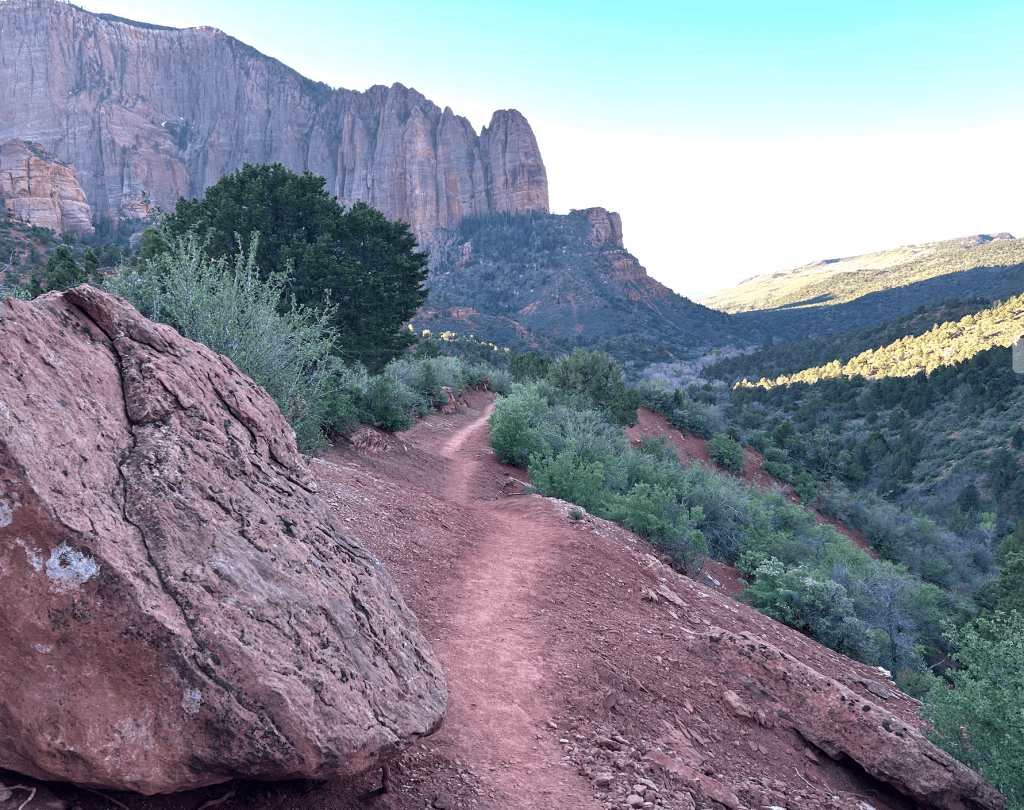
A great example of an “anti-suffering” trail. What is not to like about this?
Long Haul Driving
After we left Zion, we had eight successive days of one-night stays before getting home. This part of RV’ing is about endurance, not leisure.
As we have gotten older, we have significantly reduced the distance we are willing to travel in one day. On our first RV trip in 2013, we (or I should more accurately say “I”) routinely booked days with 650 or more miles of travel. We average 50 miles an hour over the course of a day, including all our stops – so 650 miles is 13 hours of driving. If you leave by 7 am (which requires getting up at 5 or 5:30 am) you get in at 8 pm (often in the dark) assuming everything went perfectly. It takes at least an hour to hook up, take the dogs out and make dinner. You eat at 9, go to bed at 10 or 11, and repeat the next day. What were we thinking?? This is not civilized!!
We now don’t plan trips of more than 450 miles in a day unless we must and really prefer 350 miles. That is 7 hours of driving. If you get up at 6 and leave by 8, you get in around 3 or 4, can settle in, have a leisurely drink and dinner and get a good night’s sleep. Much more civilized and a lot less tiring. I guess it is our version of “anti-suffering long-haul RVing”.
We stayed at some very sketchy places and some delightful places. Many of the sketchier places ended up being largely occupied by remote workers. We stopped at one park in northern New Mexico that was basically a small fenced in parking lot with about 50 RV sites – many of them long-termers (which you can usually tell by their large propane tanks, toolboxes in the pickups and miscellaneous trash around the site) with license plates from eight different states – Michigan, Tennessee, Utah, Mississippi, Nevada, Vermont, Kentucky, and Illinois. A distinguishing feature of that park was that it had the best laundry facilities of any place we stayed – commercial quality washers and dryers – a reflection of the fact that the occupants were working construction and needed big washers and dryers to handle their frequent clothes washing of heavy, dirty materials.
The most delightful place we stayed was the Angel Fire RV Resort in Angel Fire NM, about an hour northeast of Taos. Angel Fire is at 8,400 feet of elevation, nestled in between two mountain ranges. The night we were there, the temperature dropped to 20 degrees, testing our cold-weather limits. (We were there the first week of April and they noted that last year they got 22 inches of snow in May. So we were lucky it was only cold!) The sites were large and impeccably maintained. This is a place we will return to at some time.
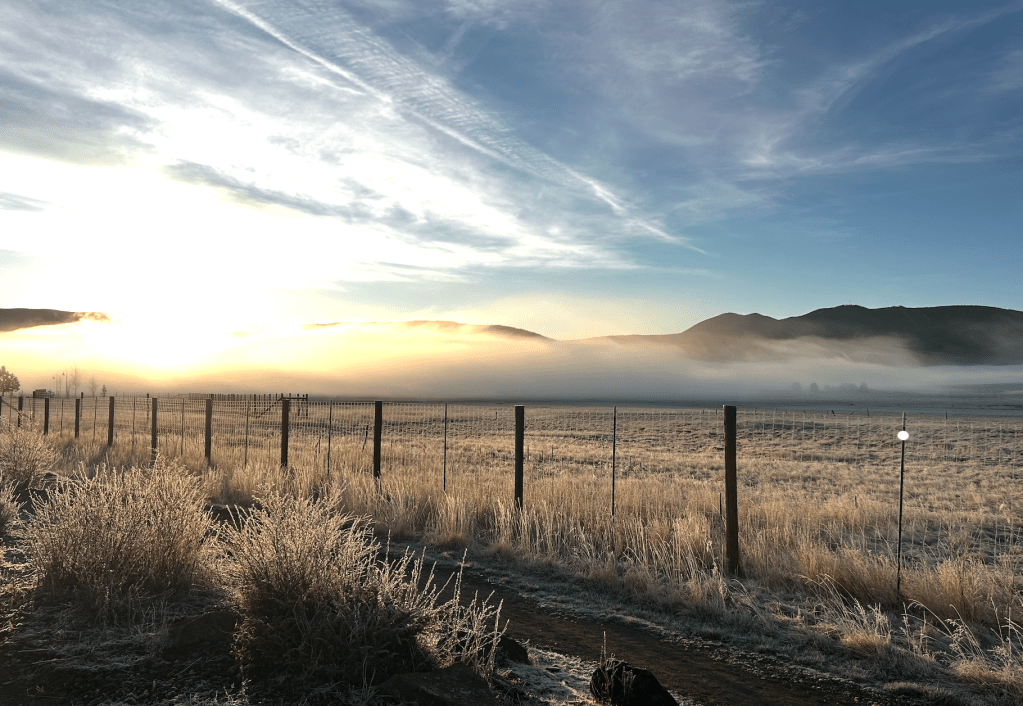
A frosty morning in Angel Fire.
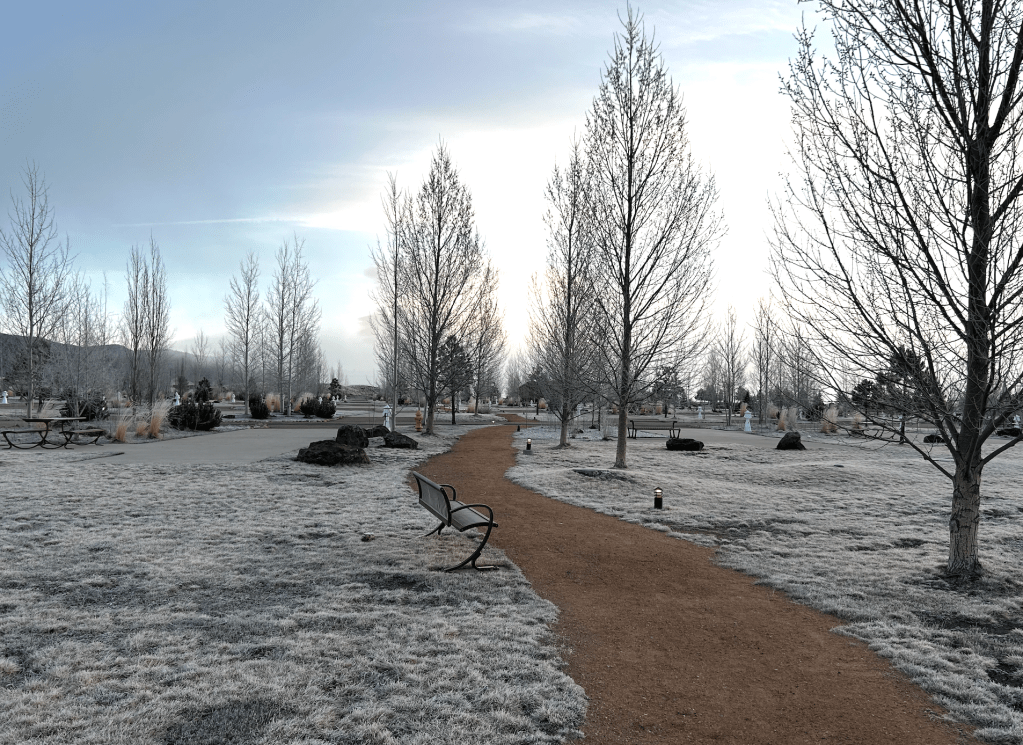
We had the place to ourselves. Maybe everyone else knew about the possibility of deep snow this time of year…
The drive home reminded us again of how vast our country is. The landscape in Western Oklahoma was particularly distinctive. It was disorienting to be able to see from distant horizon to distant horizon and see nothing but short brown grass – I mean really nothing, no stock animals, no fences, no trees or bushes, no buildings, not even any evidence of our ubiquitous grids. And the nothingness goes on for hours.
Michelle and I talked about the fact that we couldn’t live in a landscape like this. The barrenness would overwhelm us. Then it occurred to us – what would it be for someone who grew up in this territory to live in our terrain? We figured they would be overwhelmed by the trees, feeling claustrophobic and trapped and yearning for open spaces?
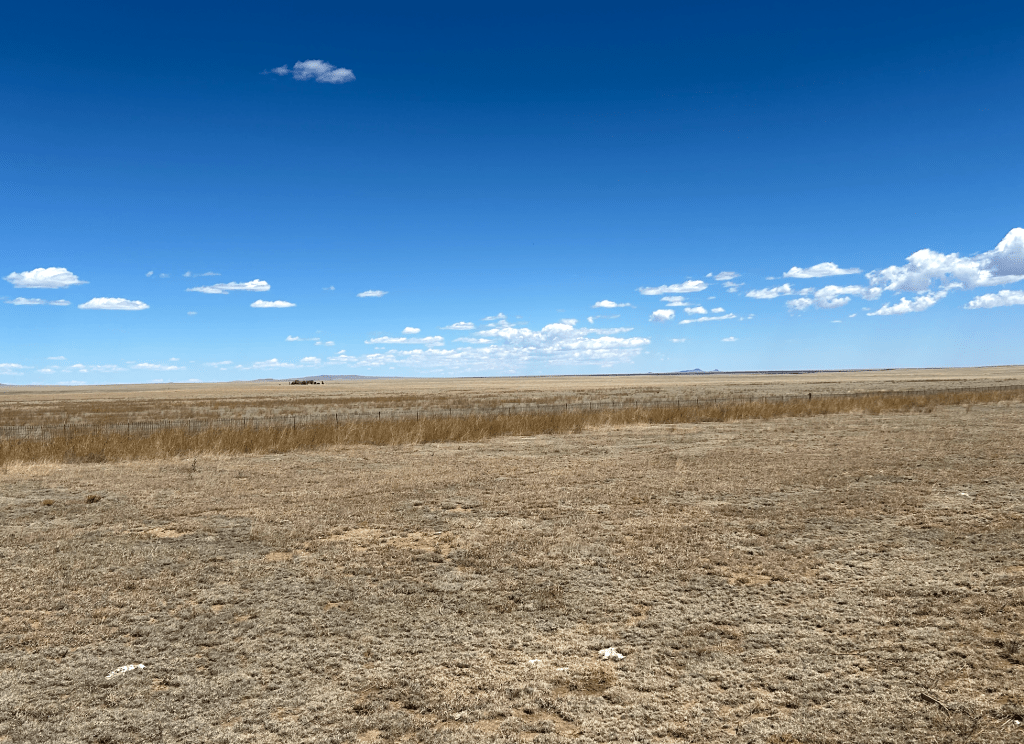
Nothing as far as the eye can see.
The other thing that struck us on the home trip was the lack of variation in the Eastern landscape compared to the Western landscape we were coming from. Once we go into central Missouri, the ecology turned to mostly deciduous trees and a mix of flat farmland and rolling hills, and that did not change for almost 1,300 miles from there to mountains of Vermont. In contrast, in the 1,200 miles from Albuquerque to Napa, you pass through a multitude of radically different landscapes and ecologies. This reminded us why it is worth the six-day slog to get to the West.
Arriving Home
Despite the shorter days, we were exhausted by the time we got home after 8 days of driving and 2,700 miles of highways. It took several days to feel rested again.
But getting back into our “home off the road” was miraculous. Wow! A 10X increase in living space! No need to worry about the septic tank filling up! No need to walk the dogs! A real office! A printer! A washer and dryer! A dishwasher! Kids and grandkids to hug! Wondrous forests out your front door! Ten minutes to a steep New England hike! The list goes on. It was good to be home.
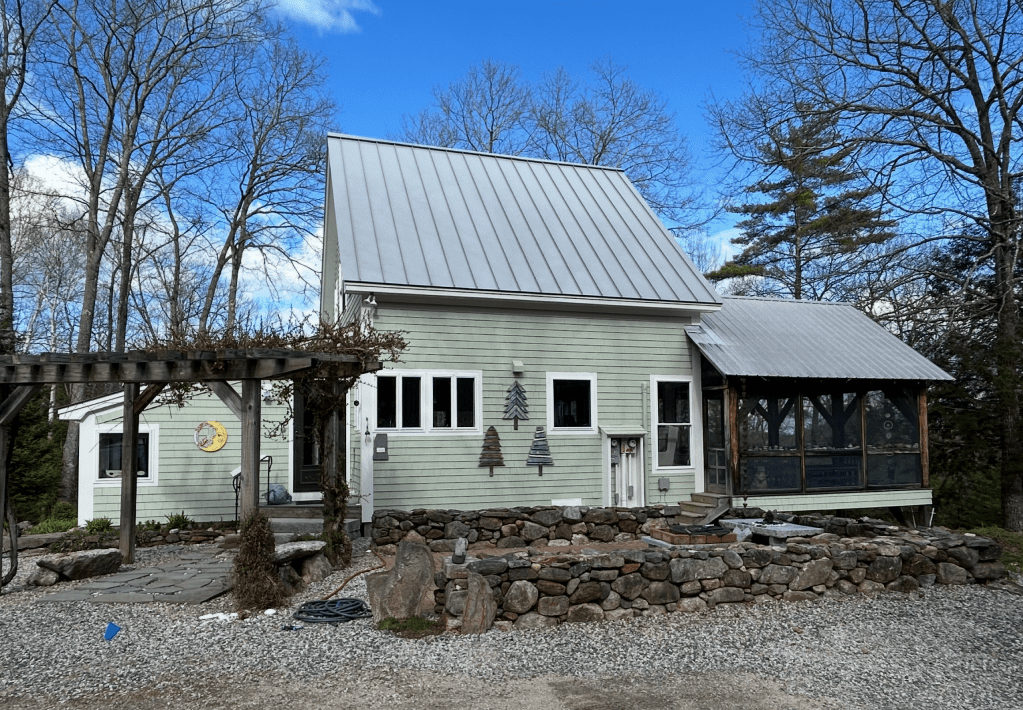
Home off the road!
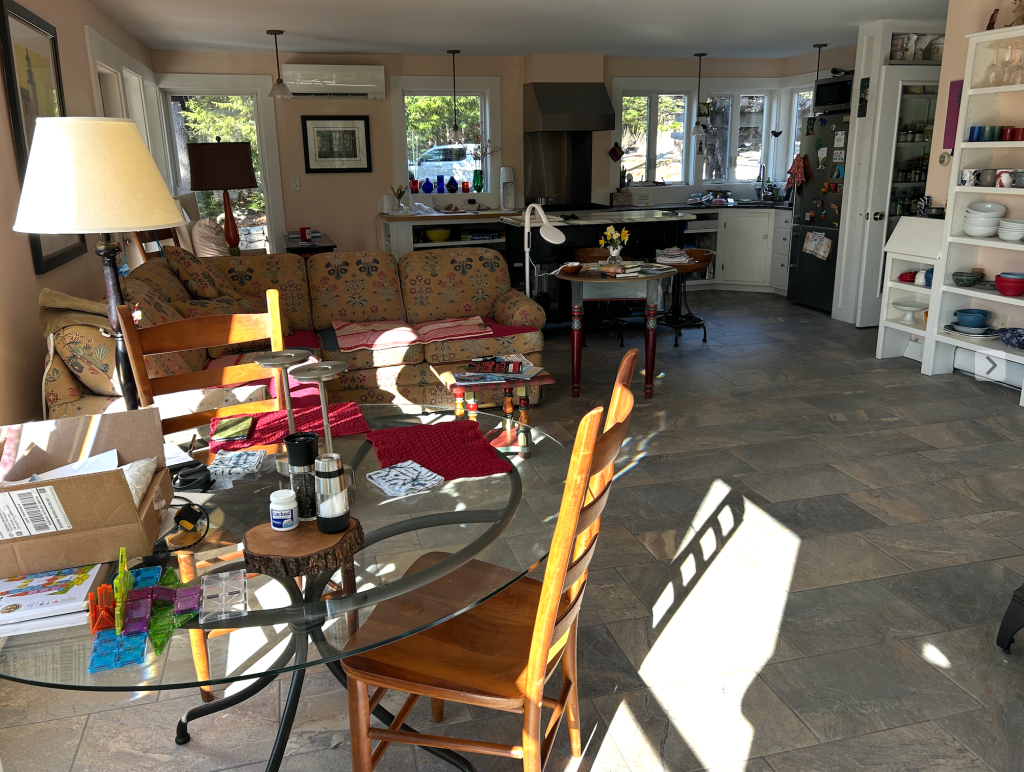
This space felt massive…
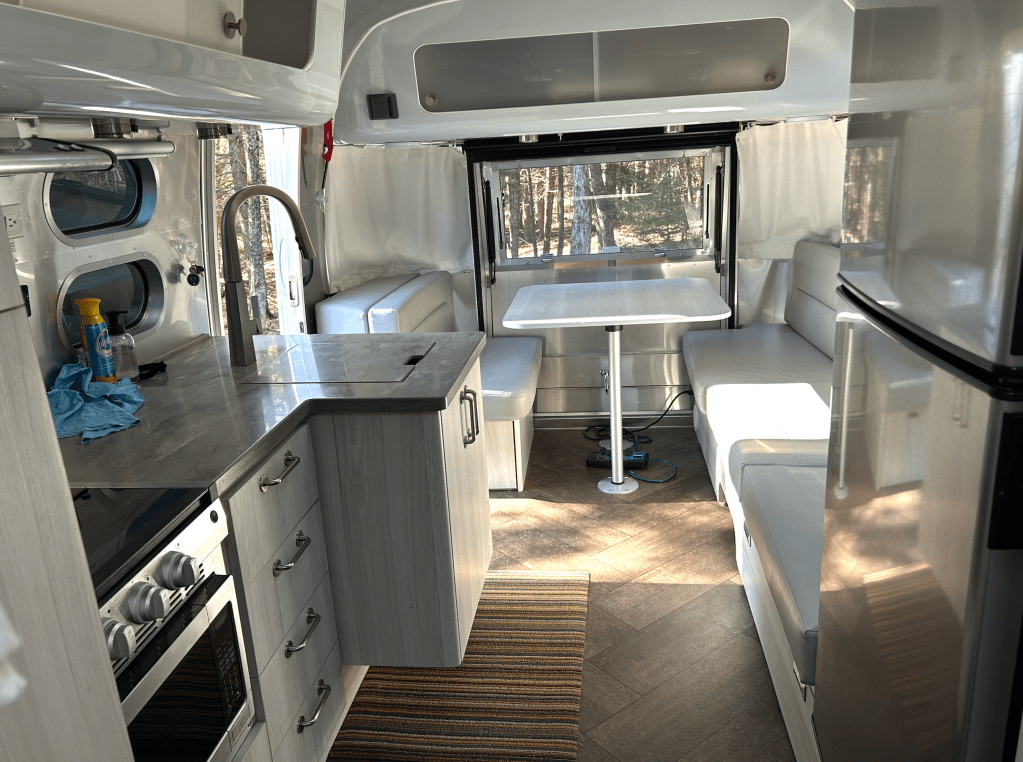
…compared to this.

A raucous daffodil welcome.
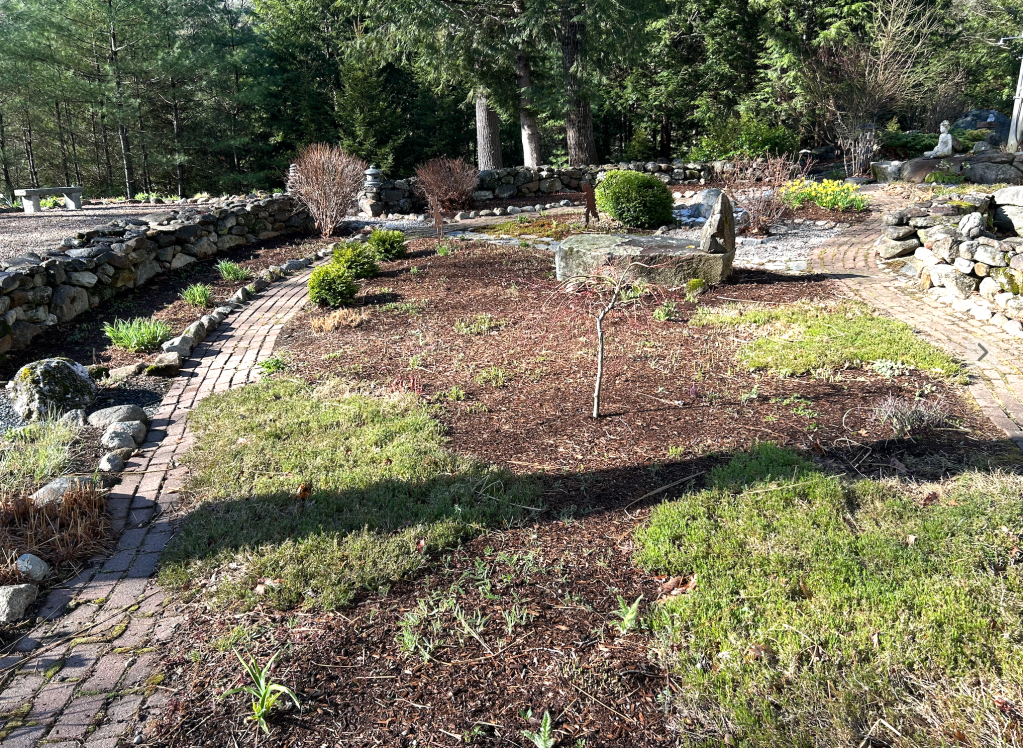
Right now there is not much going on above the surface.
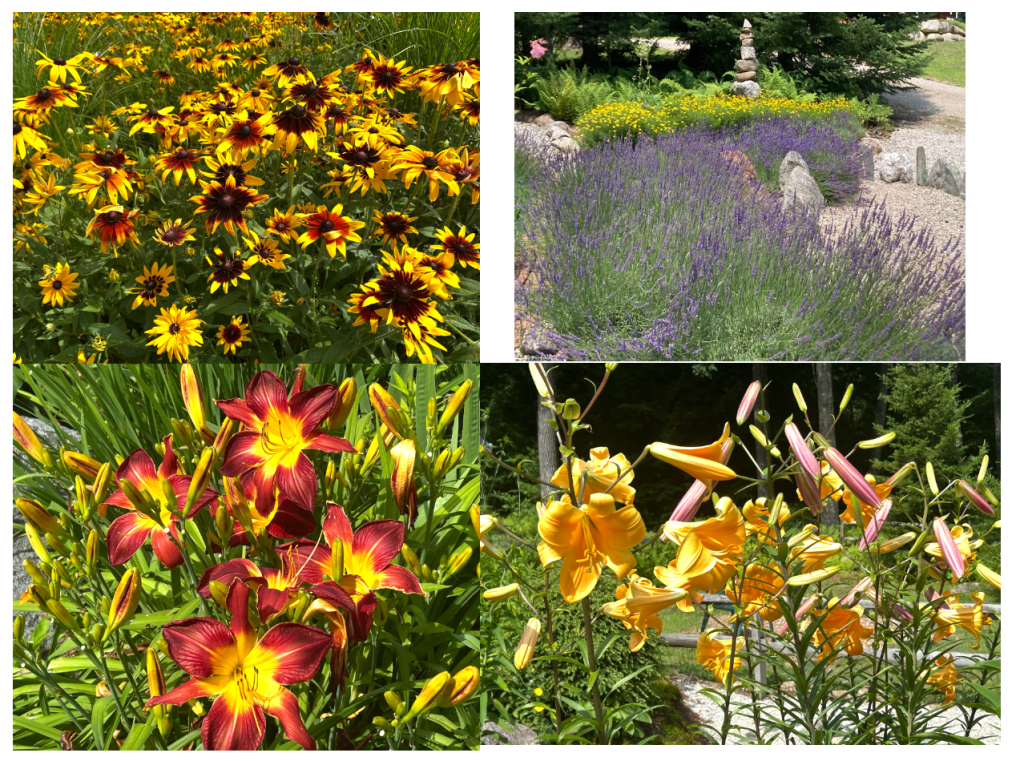
But you know these old friends are just waiting to say HI!
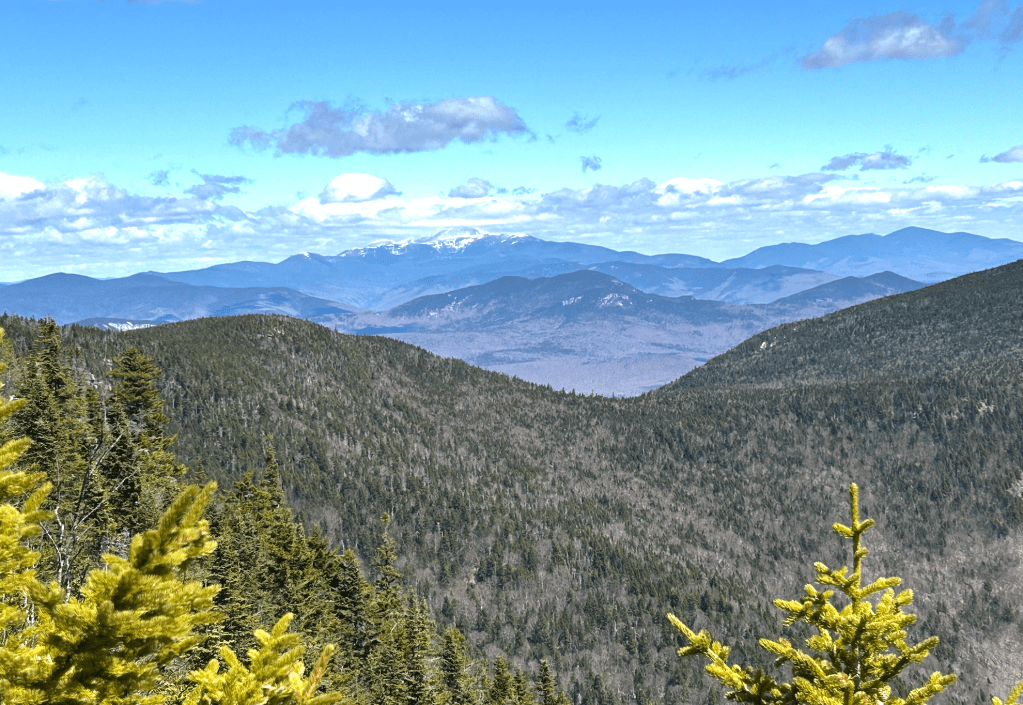
And the mountain vistas are still stunning. A view from our “home mountain” of Whiteface — one of the 48 White Mountain 4000 footers — with Mount Washington in the background. No red rocks, no cacti, no precipitous cliffs, just New England delightfulness.
Grand Adventure By the Numbers
- Travel time: 6 months, 25.6 weeks, 181 days, 4,344 hours, 260,640 minutes, 15.6 million seconds
- Travel distance: 15,323 miles; 520 million revolutions of the 8-cylinder engine
- Estimated gallons of gas used: 1,095
- Tons of carbon produced: 11
- Tons of carbon offset by “gold plated” carbon credits (ClimeWorks Direct Carbon Removal $700/ton): 8
- Tons offset by less rigorous credits (TerraPass $18/ton): 3
- Highest price paid for gas: $7.20 (Desert Valley National Park station)
- Lowest price paid: $3.19 (somewhere in Oklahoma)
- Engine “happy zone”for hauling the trailer on a relatively flat road: 60 to 65 mph, settling in at 1,800 RPMs – (which creates a low humming sound/feeling that you find relaxes you after a while).
- States visited: 15
- RV parks visited: 25
- Average per-night RV park cost: $67
- Hottest temperature: 105 F in Death Valley, CA
- Coldest temperature: 20 F in Angel Fire, NM
- Days of sun: 160 (88%)
- Days of rain: 16 (12%)
- Dog potty walks: 1,086
- Poop bags used: 900
- Dog groomings: 3 (1 per dog)
- People groomings: 1 (John at Mexican barber shop in Indio, CA. Only old white gringo in the place, for sure.)
- Gallons of water filtered with our Berkey filter: 400
- Long-term friends made: 3
- Great bakeries discovered: 4
- Number of bakeries with bread better than Lauren’s: 0
- Pictures taken: 2,071
- Medical provider visits: 2 (people); 1 (dogs)
- Cacti injuries incurred: 2
- NH plates seen in RV parks West of the Mississippi: 5
- Flat tires: 0
- Truck repairs required: 2
- RV repairs that required professionals: 3
- DIY RV repairs: 5
- DIY repairs that ChatGPT helped with: 5
- Times gone swimming (all in Pacific Ocean): 4
- SpaceX launches seen: 2
- Meals eaten: 543
- Meals eaten out: 10 (2%)
- Number of Hikes: 24
- Miles hiked: 186 (average of 7.8/hike)
- Vertical climbed: 39,500 feet (average of 1,647/hike)
- Regrets that we did the Grand Adventure: 0
This was truly a “trip of a lifetime”. We will go again – where and for how long yet to be determined. We loved the trailer and never “wanted out of it’. We really enjoyed traveling together. We are very compatible voyagers.
Three dogs is too many! (But if Bob is around when we go again, he will be coming with us.)
The trip reminded us of the vast diversity of our country – something that is hard to experience virtually – you have to get on the road. It gave us a sense of hope about healing our national wounds and finding a way to live together in peace and tolerance. We come back to our local work with a renewed sense of purpose.
Peace and love to you all.
John, Michelle, Bob, Raven and Wren
PS – There were a bunch of topics I did want to write about but never got around to. So maybe they will show up in your inbox unannounced. Of course if you want to unsubscribe, just go to the website!


You must be logged in to post a comment.